
The market for antique wooden pharmacy fixtures, particularly the coveted apothecary chest, is one of deep appreciation and, consequently, sophisticated reproduction. Authenticating these pieces traditionally relies on the expert eye of a curator or seasoned dealer. Today, machine learning (ML) and computer vision are emerging as powerful analytical tools that augment this process, providing data-driven insights to help verify age, origin, and authenticity. This overview examines the neutral, technical applications of AI in tracing the history of these complex artifacts.
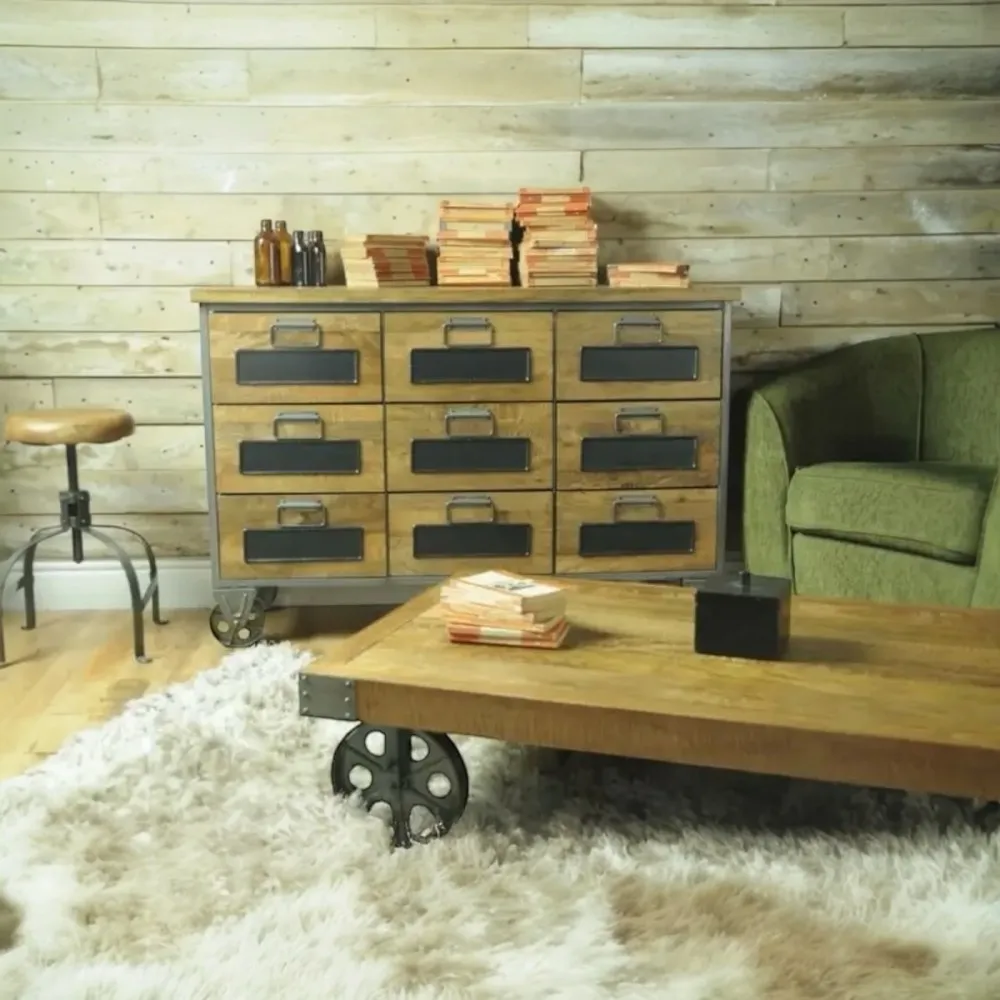
1. The Authentication Challenge: Beyond the Human Eye
A genuine 19th-century apothecary chest presents a multifaceted puzzle. Key authentication points include:
-
Joinery Analysis: Hand-cut dovetails vs. machine-cut uniformity.
-
Tool Mark Patterns: Planing, sawing, and boring marks characteristic of specific eras.
-
Material Verification: Wood species,type of glass, and metal fittings appropriate to the period and region.
-
Patina & Wear Modeling: Natural aging of surfaces, edges, and drawer interiors that follows logical use patterns.
-
Label & Inscription Analysis: Handwriting style, ink composition, and linguistic content.
Human expertise is subjective and can be limited by an individual’s reference database. AI systems are trained to detect patterns across thousands of examples, offering a scalable, comparative basis for analysis.
2. The Role of Computer Vision: Seeing the Details
Computer vision algorithms act as a hyper-attentive, measurable lens for the wooden pharmacy cabinet.
-
Micro-Pattern Recognition:
-
Joinery: Algorithms can be trained on thousands of images of documented joinery. They can measure the angle, spacing, and symmetry of dovetail pins to statistically determine the likelihood of hand tooling (irregular) versus modern machine reproduction (perfectly uniform).
-
Tool Marks: Subtle traces left by specific planes, saws, or drills create microscopic patterns. Computer vision can classify these patterns, correlating them with tool technologies from different decades.
-
Surface Topography: 3D scanning and photogrammetry, processed by AI, can map the wear on drawer pulls, runner edges, and cabinet corners. It can differentiate between authentic, gradual wear and artificial distressing, which often follows less natural patterns.
-
-
Material and Finish Analysis:
-
While not replacing chemical tests, AI can enhance multispectral image analysis. By processing images taken under different light wavelengths, algorithms can help identify regions where modern varnishes or stains differ from historic formulations, or suggest areas for further physical sampling.
-
3. The Role of Machine Learning: Building the Comparative Database
ML provides the brain that interprets what computer vision sees. Its power lies in correlation and prediction.
-
Provenance Tracing & Regional Attribution:
-
A model can be trained on a dataset of apothecary chest examples with known origins (e.g., “London, 1880s,” “Scottish Highlands, 1840”). It learns to correlate features like specific drawer pull designs, wood secondary choices (e.g., use of deal vs. pine), and case proportions with those regions and periods. For an unknown piece, the model can then provide a probabilistic attribution based on its feature set.
-
-
Label and Document Cross-Referencing:
-
Optical Character Recognition (OCR) powered by ML can transcribe handwritten labels from a wooden pharmacy cabinet, even from faded or stained paper. This text can then be cross-referenced with digital archives of apothecary catalogs, pharmacy ledgers, or trade directories to find matches for names, locations, or product lists, helping to build a historical paper trail.
-
-
Anomaly Detection:
-
The most straightforward application. An ML system trained on hundreds of authentic examples can flag components that are statistical outliers—a drawer front with a wood grain pattern atypical for the era, or a pull with a design that post-dates the cabinet’s supposed construction. This directs expert attention to potential replaced parts or forgeries.
-
4. Integrated Workflow: A Case Study
A neutral application of this technology might follow these steps for an unprovenanced apothecary chest:
-
Data Capture: The piece is photographed in ultra-high resolution and 3D-scanned from hundreds of angles.
-
Feature Extraction: Computer vision algorithms isolate and quantify key features: dovetail angles, pull dimensions, wood grain texture metrics, label glyphs.
-
Model Query: These feature vectors are fed into a trained ML model containing data from museum collections, auction archives, and documented restorations.
-
Analytical Output: The system generates a neutral report, not a definitive verdict. It might state:
-
“Dovetail characteristics have a 92% similarity to known British examples from 1860-1890.”
-
“Wear patterns on primary drawers are consistent with models of heavy use; wear on secondary drawers is statistically anomalous.”
-
“Handwriting on labels shows high correlation with a scribe known to have supplied pharmacies in Bristol between 1875-1905.”
-
-
Expert Synthesis: A human expert uses this data-rich report, alongside physical inspection (e.g., smell, nail type, secondary wood) and documentary research, to form a final, holistic assessment.
Conclusion: Augmentation, Not Replacement
The use of ML and computer vision in authenticating wooden pharmacy antiques and the apothecary chest represents a shift towards forensic, data-supported connoisseurship. It does not replace the nuanced understanding of a historian or the tactile knowledge of a restorer. Instead, it provides a powerful layer of objective, comparative analysis. These tools help demystify aspects of authentication, trace subtle historical lineages, and ultimately, build a more robust and verifiable narrative for these storied objects. Their neutral value lies in turning subjective observation into quantifiable, comparable data, enriching our understanding of material culture.
Table: AI Authentication Applications at a Glance
| Feature to Authenticate | Traditional Method | AI-Augmented Method |
|---|---|---|
| Joinery (Dovetails) | Visual comparison to known examples; feel of tool marks. | Algorithmic measurement of pin spacing/angle; pattern matching against a database of 10,000+ examples. |
| Wear & Patina | Subjective assessment of “look” and feel. | 3D surface topography mapping to model depth and distribution of wear; statistical analysis against use-pattern models. |
| Regional Attribution | Knowledge of local styles, woods, and construction quirks. | ML model correlation of multiple features (proportions, hardware, secondary wood) against geotagged examples. |
| Label Analysis | Paleographic skill; archival research. | OCR transcription; cross-referencing with digital trade archives; handwriting style matching. |
| Anomaly Detection | Expert’s “gut feeling” that something is off. | Statistical outlier detection across dozens of measured parameters, flagging inconsistencies for review. |
