
The industrial design aesthetic has secured its place as a modern classic. Born from the repurposing of old factories and warehouses, this style celebrates the bones of a building: exposed brick, concrete floors, soaring ceilings, and ductwork left intentionally visible. It is a look defined by raw materials, a neutral palette, and a sense of utilitarian function. However, a space composed entirely of steel and concrete can sometimes feel cold, stark, or unwelcoming.
This is where the art of balance comes into play. To soften the hard edges and cool surfaces of an industrial space, you need an element of warmth and history. Nothing achieves this quite like wood, specifically wood that carries a story. Vintage wood acts as the perfect counterpoint to the man-made precision of industrial design. It introduces organic texture, a spectrum of warm hues, and a sense of time that a newly constructed space often lacks. The integration of vintage wood is not just about decoration; it’s about soul. It transforms a loft-like shell into a lived-in home, proving that the past and present can coexist beautifully.
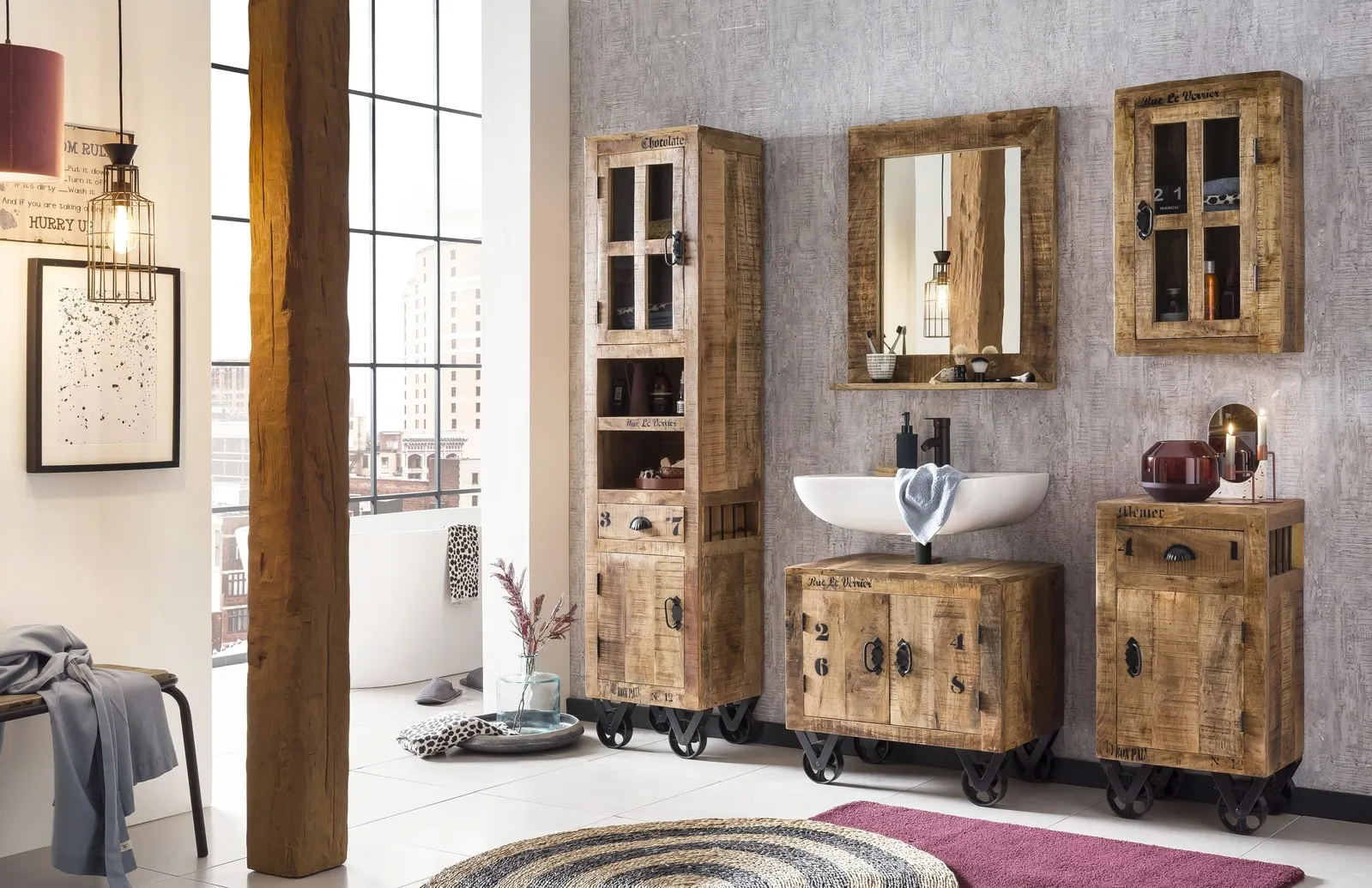
Step 1: Choosing Your Statement Piece
The first step in blending these styles is selecting a focal point. In the minimalist world of industrial design, one substantial piece can define an entire room. This is where the narrative of your space begins.
A reclaimed wood dining table is a perfect example. Imagine a massive slab of recovered oak, pitted with nail holes and stained with the patina of a century, resting on a sleek, black powder-coated steel frame. This juxtaposition is the essence of the style. The industrial reclaimed wood furniture provides the history and organic shape, while the steel frame pays homage to the industrial roots. By starting with one hero piece—be it a table, a console, or a bed frame—you establish a foundation of character upon which the rest of the room can be built.
Step 2: Layering Texture with Furniture
Once you have your statement piece, the next step is to build depth by introducing more layers. Industrial design can sometimes risk looking flat if every surface is smooth and hard. To combat this, you need to bring in pieces that have a tactile quality. The rough-sawn surface of a reclaimed barn door sliding on a metal track, or a chunky wooden coffee table with a live edge, adds a sensory layer to the room.
The most effective way to build this texture is through the strategic placement of industrial reclaimed wood furniture. This category is vast and provides endless opportunities to infuse character.
-
Storage Solutions: A large, multi-drawer apothecary cabinet made from reclaimed pine offers practical storage while acting as a piece of art. Its weathered face tells a story of a previous life in a workshop or factory.
-
Seating: Benches or stools with seats fashioned from old barn wood bring a rustic touch to a kitchen island, breaking up the monotony of modern cabinetry.
-
Shelving: Open shelving units constructed from thick planks and iron pipes are not just functional; they visually warm up a wall and provide a perfect backdrop for displaying curated objects.
By mixing these furniture pieces throughout the space, you ensure the warmth of the wood is distributed evenly, creating a cohesive and inviting atmosphere.
Step 3: The Power of Contrast
The magic of this design style lies in its contrasts. Vintage wood should not just blend in with the background; it should stand out against it. The goal is to make the materials “pop” against one another.
For instance, placing a distressed wooden console table against a smooth, polished concrete wall creates a dynamic tension that is visually captivating. The eye moves from the cool, seamless grey of the wall to the warm, textured grain of the wood. Similarly, hanging a large, rustic wooden mirror in a room with exposed ductwork and metal windows reflects light and adds an unexpected softness. This contrast is what prevents the industrial elements from feeling too harsh and the wooden elements from feeling too rustic. They sharpen each other, highlighting the best qualities of both materials.
Step 4: Mixing Eras and Finishes
A common misconception is that industrial design requires everything to look new or factory-made. In reality, the most compelling interiors are those that look like they have evolved over time. Don’t be afraid to mix different types of wood or blend your vintage finds with other natural materials.
Consider pairing the warm tones of industrial reclaimed wood furniture with leather, wool, or linen. A worn leather sofa sitting next to a reclaimed wood side table creates a beautiful harmony of aged materials. You can also mix wood finishes—perhaps a lighter, whitewashed reclaimed wood for the ceiling beams, and a darker, walnut-stained piece for the floor. This variety prevents the space from feeling too “matchy-matchy” and adds to the curated, collected-over-time feel that makes an industrial space feel truly personal and full of character.
Step 5: Accessorizing with Found Objects
Finally, to complete the look, consider the smaller details. The character of vintage wood isn’t limited to large furniture. Look for smaller accessories that incorporate the material, such as wooden bowls, carved sculptures, or picture frames made from old floorboards. These finishing touches tie the entire aesthetic together.
By following these steps, you can master the art of blending the old with the new. The inclusion of vintage wood ensures that your industrial interior is not just a showcase of modern design, but a warm, textured, and deeply personal sanctuary that tells a story with every grain.
