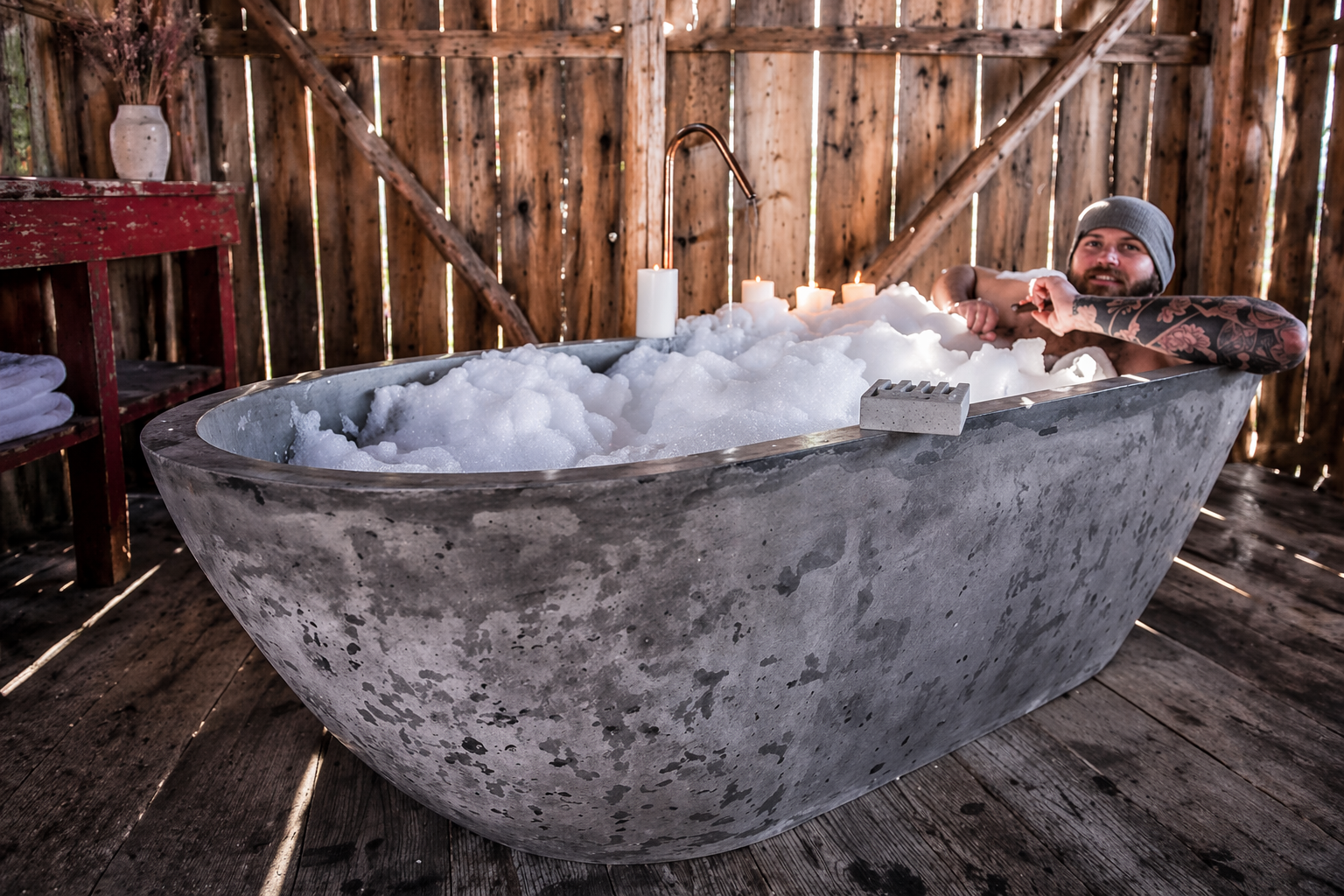
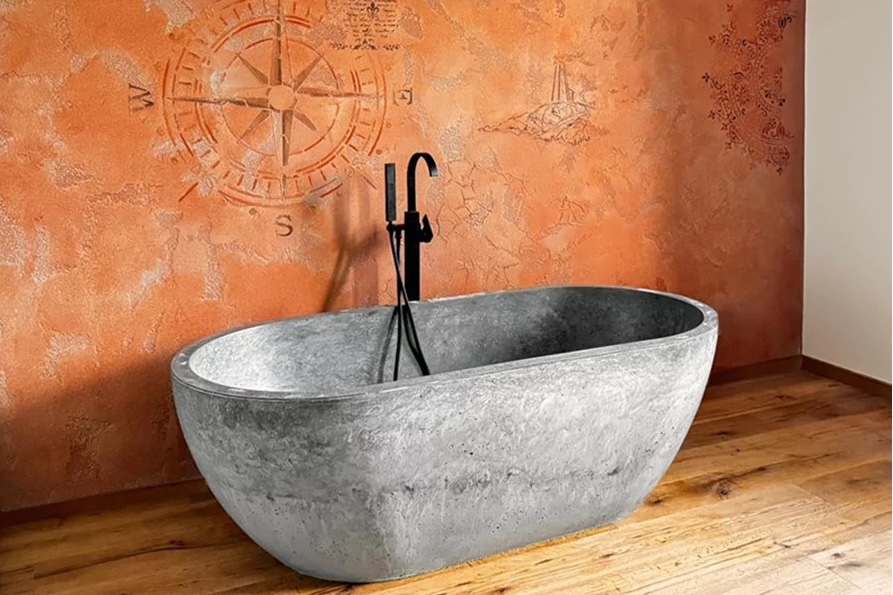
Concrete bathtubs have moved from niche architectural features into the mainstream of high-end interior design. Once associated purely with industrial spaces, they’re now found in luxury homes, boutique hotels, and design-led renovations. The appeal lies in their raw materiality, sculptural presence, and the ability to create something entirely bespoke.
This isn’t just a bath—it’s a centrepiece.
What Is a Concrete Bathtub?
A concrete bathtub is exactly what it sounds like: a bath formed using a cement-based mix, often reinforced with fibres or composites for strength and durability. Unlike standard acrylic or steel tubs, these are typically handcrafted and made to order, allowing for precise control over shape, size, colour, and finish.
They can be:
Smooth and polished for a refined, modern look
Textured or raw for a more industrial aesthetic
Pigmented in greys, charcoals, or even warmer tones
Each one carries subtle variations, giving it a one-of-a-kind feel.
Why Concrete Baths Are Gaining Popularity
1. Sculptural Impact
Concrete bathtubs command attention. Their weight, thickness, and presence give them a monolithic, architectural quality that lighter materials simply can’t replicate.
2. Fully Bespoke Design
From oval soaking tubs to sharp-edged geometric forms, concrete can be moulded into almost any shape. This makes it ideal for:
Statement bathrooms
Awkward layouts
Design-led renovations
3. Thermal Retention
Concrete retains heat exceptionally well. Once filled, the bath stays warmer for longer—ideal for long, relaxed soaks without constantly topping up hot water.
4. Durability
Properly sealed concrete is highly durable and resistant to everyday wear. It won’t flex like acrylic or dent like metal.
Things to Consider Before Installing
Concrete baths aren’t for every space. There are practical factors to think about:
Weight
These baths are significantly heavier than standard options. Floor reinforcement may be required, particularly in upper-floor installations.
Installation Complexity
Unlike plug-and-play tubs, concrete baths often require:
Professional installation
Careful positioning (they’re not easy to move once in place)
Consideration of drainage and support
Maintenance
Concrete must be sealed to prevent water absorption and staining. Over time, resealing may be required to maintain its finish.
Cost
They sit firmly in the premium category. Pricing reflects:
Handcrafted production
Material quality
Bespoke design
Design Styles That Work Well with Concrete
Concrete bathtubs are versatile, but they shine in certain environments:
Industrial Interiors
Exposed brick, metal fixtures, and raw timber pair naturally with concrete’s unfinished look.
Minimalist Spaces
A clean, neutral palette allows the bath to become the focal point without visual clutter.
Rustic-Luxe Bathrooms
Combine concrete with reclaimed wood, warm lighting, and soft textiles to balance hardness with comfort.
Contemporary Luxury
Polished concrete finishes can feel sleek and high-end when paired with brass or matte black fittings.
Are Concrete Bathtubs Practical for Everyday Use?
Yes—with the right setup.
They’re best suited to homeowners who:
Value design as much as function
Are willing to invest in long-term materials
Want a standout feature rather than a standard fixture
For busy family bathrooms, lighter and more forgiving materials may be more practical. But for a master suite or design-led renovation, concrete delivers something far more distinctive.
Final Thoughts
Concrete bathtubs sit at the intersection of architecture and interior design. They offer a rare combination of durability, customisation, and visual impact.
They’re not subtle. They’re not standard.
But that’s exactly the point.
In the right space, a concrete bath doesn’t just fit in—it defines the entire room.