
Walking into a room and feeling that instant shift in mood—that’s the magic of great lighting. If you are looking to add a dash of personality, a pop of color, or a soft, calming glow to your personal space, a table lamp might be exactly what you need. Gone are the days when neon was reserved for diner signs and commercial storefronts. Today, it is a staple of interior design, offering a unique way to blend functionality with modern art.
However, with so many styles, sizes, and technical specifications on the market, finding the perfect neon table lamps for your bedroom or study can feel overwhelming. Do you go for a bright white light for focusing on work, or a warm hue for relaxing? Should it be a statement piece or a subtle accent?

Do not worry; we have got you covered. This step-by-step guide will walk you through every factor you need to consider to make the perfect choice.
Step 1: Define the Primary Purpose
Before you even start looking at colors and shapes, you need to ask yourself a crucial question: What is the main job of this lamp?
-
For the Study (Task Lighting): If the lamp is destined for your desk, functionality is key. You need a light that reduces eye strain during reading or writing. Look for lamps that offer bright, focused illumination. The goal here is clarity. You might want to prioritize lamps with adjustable arms or heads so you can direct the light exactly where you need it.
-
For the Bedroom (Ambient/Mood Lighting): In the bedroom, the lamp is likely intended to create a relaxing sanctuary. Here, the intensity of the light is less important than the atmosphere it creates. You are looking for a soft, diffused glow that helps you wind down after a long day. As one design expert notes, modern LED neon lights are designed to radiate a soft, warm glow, enveloping spaces in a cozy ambiance .
Understanding this primary distinction will guide every other decision you make, from brightness to color temperature.
Step 2: Understand Light Characteristics (It’s More Than Just Brightness)
Once you know the purpose, it is time to dive into the science of light. This is the most technical step, but it is vital to ensuring the lamp performs as expected.
-
Lumens (Brightness): Forget watts; lumens are the true measure of brightness. For a study desk where you will be working, you will need a higher lumen output—think 600 lumens or more . For a bedroom side table meant for ambiance, a lower output is perfectly fine and often preferable.
-
Color Temperature (The Vibe): Measured in Kelvin (K), this determines whether the light feels warm or cool.
-
Warm White (2400K – 3000K): This creates a yellowish, cozy, and inviting glow. It is perfect for bedrooms. For instance, some designer lamps are meticulously crafted to radiate a soft, warm glow at 2400 Kelvin to maximize relaxation . Others in the 3000K range are great for relaxing as well .
-
Cool White (3500K – 4500K): This is a neutral, bright light that is excellent for spaces where you need to concentrate, like a study or home office .
-
Daylight (5000K – 6000K): This mimics natural daylight and is very high-energy. While it offers great visibility, it might be too harsh for a bedroom .
-
-
Color Rendering Index (CRI): This measures how accurately the light shows the true colors of objects. If you are an artist or simply care about how your books and decor look under the lamp, aim for a CRI of 90 or above. A high CRI ensures that colors don’t look dull or washed out .
Step 3: Choose Your Style: Glass vs. LED
This is the fun part—the aesthetic. However, the type of “neon” you choose has practical implications.
-
Traditional Glass Neon: These are the authentic, hand-blown glass tubes. They offer a rich, vibrant color and a nostalgic feel . However, they are more fragile, heavier, and can get warm to the touch. They are best placed on stable surfaces, away from high-traffic areas where they might be knocked over.
-
LED Neon (The Modern Standard): Most neon table lamps today use LED technology encased in flexible silicone or plastic tubing . These are superior for several reasons:
-
Safety: They remain cool to the touch, so there is no risk of burns .
-
Durability: They are shatterproof and flexible, making them much safer and longer-lasting.
-
Versatility: Because the tubing is flexible, designers can create intricate shapes and fonts that are difficult to achieve with glass.
-
Energy Efficiency: They consume a fraction of the electricity of traditional neon .
-
For a bedroom or study, an LED neon lamp is almost always the best choice due to its safety and practicality .
Step 4: Pick the Perfect Color and Design
Now, let’s get personal. This is where you inject your personality into the room.
-
Color Psychology: Think about how you want to feel.
-
Relaxation: Soft blues, lavenders, and pastel pinks promote calmness and tranquility. These are ideal for a sleep sanctuary .
-
Energy and Focus: Bright greens, electric blues, or vibrant oranges can stimulate the mind and add a playful energy to a study space .
-
Timelessness: White or warm white neon offers a sophisticated, minimalist look that complements any decor style without clashing .
-
-
Shape and Message:
-
Abstract/Minimalist: A simple tube shape, a circle, or a geometric line art piece can look incredibly chic and modern .
-
Motivational Words: A lamp featuring a word like “Dream,” “Create,” or “Focus” can serve as a daily reminder and a focal point for the room .
-
Hobby Icons: Love music? A neon note or guitar shape. Nature lover? A cactus or moon. This is your chance to customize .
-
Step 5: Consider Size and Power Source
A lamp that looks perfect online can look awkwardly large or tiny in your space. Before purchasing, grab a measuring tape.
-
Measure Your Space: For a study desk, ensure the lamp’s base doesn’t take up too much valuable real estate. For a bedroom nightstand, the lamp should be proportional to the table and the headboard. A general rule is that it should not be wider than the table it sits on .
-
Power Options:
-
Plug-in: Most reliable for consistent light output. Ensure the cord is long enough to reach your outlet, or plan for a stylish way to manage the cord .
-
USB-Powered: Extremely convenient for modern setups. You can plug it into a laptop, a wall adapter, or even a portable power bank. This is a great feature for a study, as it reduces cable clutter .
-
Battery-Operated: Offers the ultimate flexibility in placement. You can move it anywhere without worrying about outlets, making it perfect for renters or for creating temporary cozy corners .
-
Step 6: Plan the Placement
Where you put your lamp will determine its impact.
-
On the Desk: Position it to your dominant hand’s opposite side to reduce shadows while writing. If it has an adjustable arm, make sure it can rise high enough to illuminate your workspace without glaring in your eyes.
-
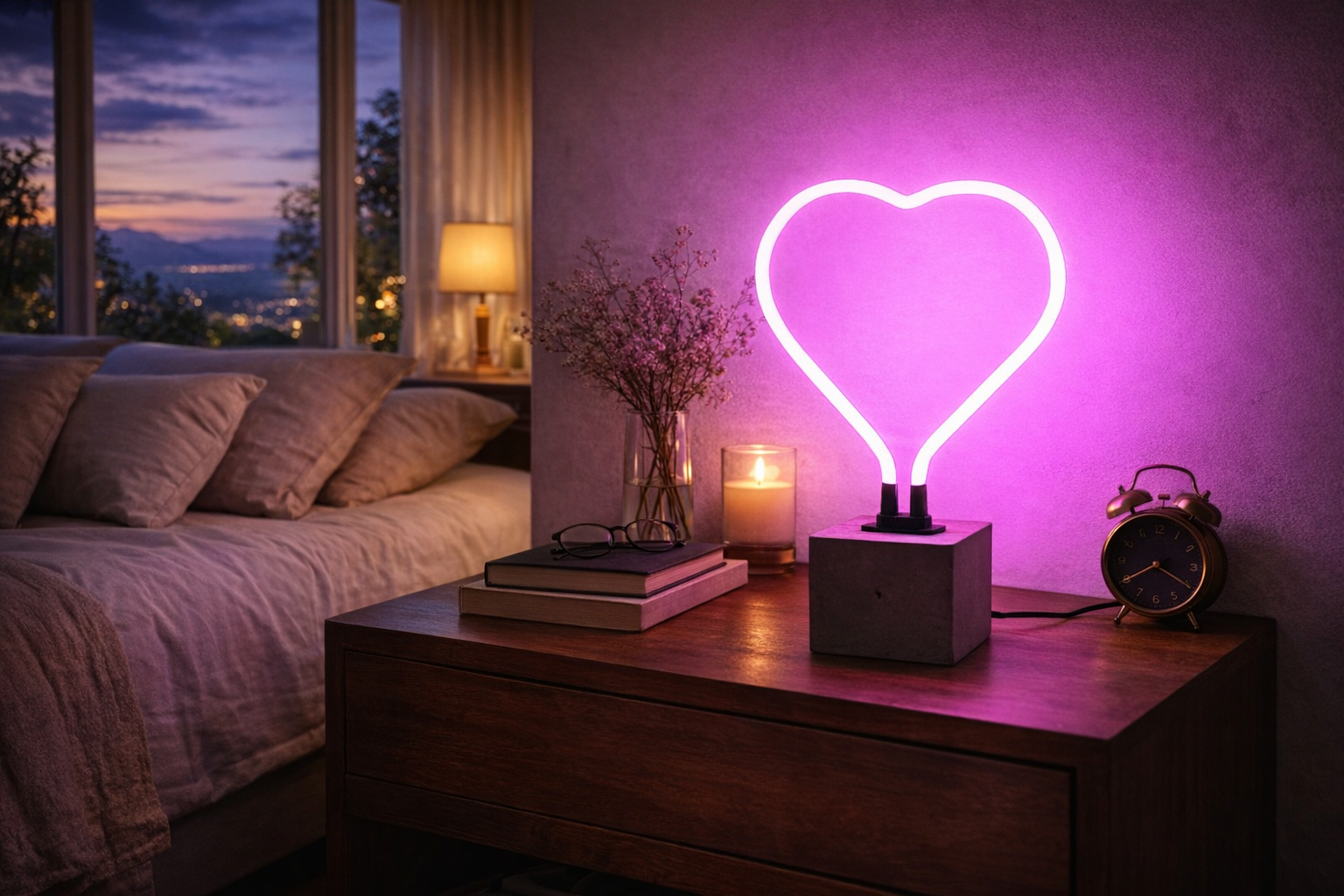
On a Nightstand: Place it slightly behind other decor items to create depth, or let it stand alone as a statement piece. The glow should be visible from the bed but not so bright that it disrupts sleep.
-
As a Shelf Accent: A smaller neon lamp looks fantastic on a bookshelf, drawing the eye to your favorite books and trinkets. It breaks up the monotony of stacked items and adds a layer of warmth to the shelving unit.

Step 7: Look for Added Features
Finally, consider if you want your lamp to do more than just look pretty. Modern designs often come with added functionalities that can enhance your experience.
-
Dimmability: The ability to adjust the brightness is a game-changer. It allows a single lamp to function as a bright study light during the day and a soft nightlight in the evening .
-
Smart Features: Some high-tech lamps can connect to your phone or voice assistant, allowing you to change colors or set schedules without getting out of bed .
-
Extras: Believe it or not, some lamps come with built-in Bluetooth speakers, allowing you to pair your phone and enjoy your favorite tunes as you relax or study .
Conclusion
Choosing the perfect neon table lamps for your bedroom or study is a journey of balancing form and function. By following these steps—defining the purpose, understanding the light specs, choosing the right materials, and planning the placement—you can find a lamp that not only illuminates your space but also elevates your mood and reflects your unique style.