
Creating that iconic neon glow involves two distinct paths: the traditional, artisanal craft of bent glass tubes and the modern, accessible world of LED neon flex. Here’s your guide to both.

Method 1: Traditional Glass Neon (The Artisan’s Way)
This is the true, original craft. It’s complex, requires specialized equipment and safety training, and is not a typical DIY project. Here’s how it’s done professionally.
Materials & Equipment Needed:
-
Glass Tubing: Lead or soda-lime glass tubes in various diameters.
-
Gas & Phosphors: Noble gases (Neon for red/orange, Argon for blue; others are mixes/coatings). Phosphor powders coat tubes for other colors.
-
Electrodes: Metal electrodes sealed at each tube end.
-
Transformer/Power Supply: High-voltage (2,000-15,000V) to ionize the gas.
-
Bending Bench: With ribbon burners (multiple fire jets) to heat glass evenly.
-
Crossfires & Torches: For detailed, localized bending.
-
Bombarding System: A vacuum pump to evacuate air and purify the tube.
-
Safety Gear: Didymium glasses (to see the glass’s true heat state), heat-resistant gloves, apron.

The Professional Process (Simplified):
-
Design & Pattern: The design is laid out as a full-size “pattern” on heat-resistant sheet.
-
Heating & Bending: The glass tube is heated over the ribbon burner until pliable (like taffy). Using the pattern as a guide, the artisan bends it by hand and with tools. This skill takes years to master.
-
Electrode Attachment: Electrodes are welded to each tube end.
-
Bombarding: One electrode is connected to a high-voltage vacuum system. The tube is heated while evacuated, removing impurities and preparing the glass.
-
Filling & Sealing: The tube is filled with a precise amount of the chosen gas at low pressure. It is then sealed off under vacuum.
-
Aging & Testing: The tube is connected to a high-voltage transformer. The initial current “ages” the tube, stabilizing its electrical characteristics.
⚠️ Critical Warning:
This is not a safe beginner hobby. It involves high voltage, extreme heat, working with mercury (in some phosphor processes), and handling pressurized/implosive glass tubes. Proper training under a master neon bender is essential.
Method 2: LED Neon Flex (The Modern DIY & Commercial Solution)
This is how 90% of modern “neon” signs are made. It’s safer, more energy-efficient, and achievable for skilled DIYers.
Materials Needed:
-
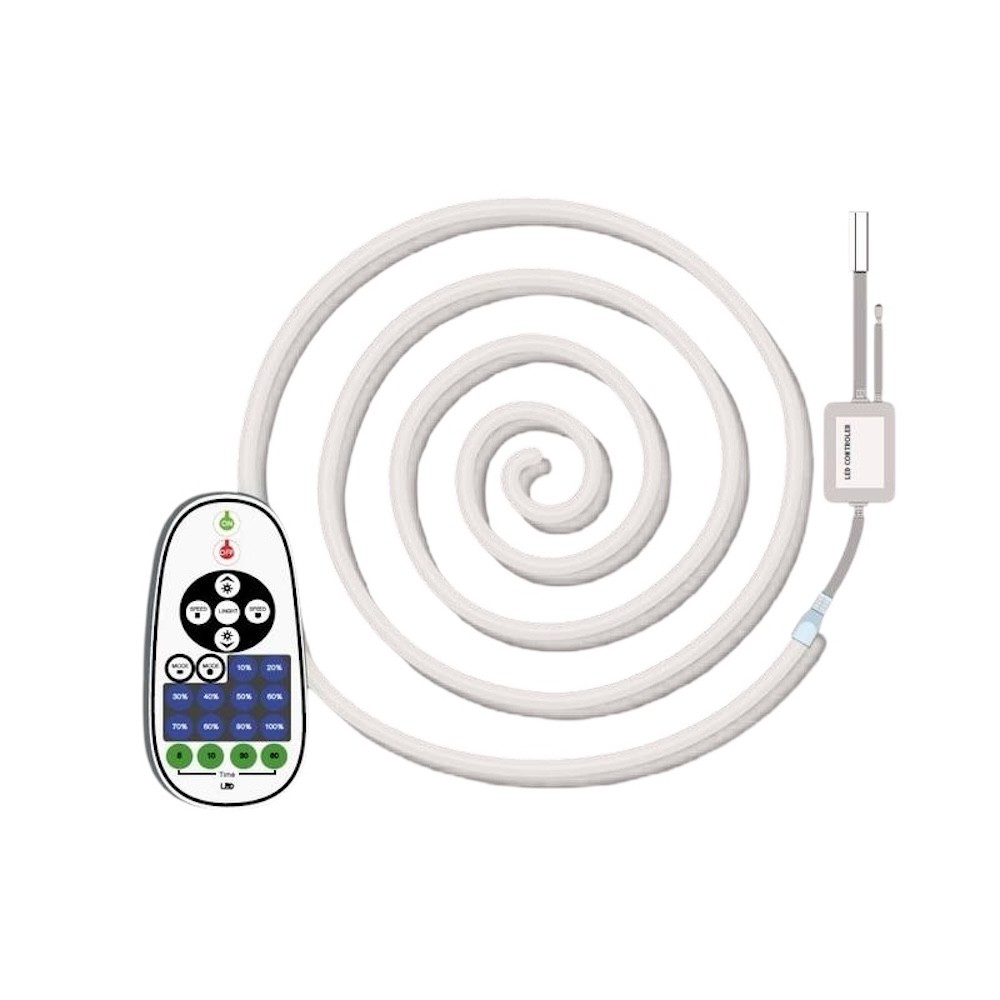
LED Neon Flex Rope: Silicone or PVC tubing with LEDs mounted on a flexible strip inside. Sold by the meter/roll.
-
Power Supply: A low-voltage (12V or 24V) DC driver. Must match the voltage and wattage of your flex.
-
Connectors: Waterproof pin connectors, end caps, and mounting clips.
-
Controller (Optional): For dimming, color-changing (RGB), or animation effects.
-
Backing Board: Acrylic, PVC, or wood to mount the flex.
-
Tools: Sharp scissors/wire cutters, soldering iron (optional, if not using connectors), silicone sealant, measuring tape.

Step-by-Step DIY Guide:
-
Design & Plan:
-
Sketch your design on paper, then create a 1:1 template on your backing board.
-
Calculate Power: Measure the total length of flex needed. Multiply by its wattage-per-meter to find total wattage. Choose a power supply with 20% more capacity (e.g., for 40W, use a 50W+ supply).
-
-
Prepare the Flex:
-
Cutting: Most LED neon flex can be cut at marked points (usually every few LEDs or at scissors symbols). Cut only at these points with sharp tools.
-
Sealing Ends: If not connecting immediately, seal cut ends with silicone and an end cap to waterproof.
-
-
Shaping & Mounting:
-
Bending: LED neon flex is highly flexible. Hand-bend it to follow your template. For sharp 90° corners, you can cut and reconnect with a corner connector, or use a hot air gun (on low) to gently warm the silicone for a tighter, permanent bend (practice on a scrap first!).
-
Mounting: Use clear or matching mounting clips every 15-20 cm. Adhesive-backed clips stick to your backing board; the flex snaps in.
-
-
Electrical Connections:
-
Using Connectors (Easiest): Slide pin connectors onto the flex’s copper pads. Ensure + and – match. Crimp or snap closed. Connect cables to your power supply.
-
Soldering (More Permanent): Solder insulated wires to the pads. Cover connections with heat-shrink tubing and silicone for protection.
-
-
Finishing & Installation:
-
Attach the backing board to your wall (using stand-offs for a “floating” look).
-
Plug in your power supply, hide wires in a channel, and test!
-
Quick-Reference Comparison Table
| Feature | Traditional Glass Neon | LED Neon Flex (Faux Neon) |
|---|---|---|
| Authenticity | The original, warm, uniform glow. | Bright, can have a “dotty” look if low-density. |
| Cost | High ($500-$3000+). | Low to Medium ($150-$800). |
| DIY Feasibility | Not feasible. Requires apprenticeship. | Highly feasible for those with basic electrical skills. |
| Safety | High voltage, extreme heat, glass. Professional only. | Low voltage (12V/24V), cool to touch, flexible. DIY-safe. |
| Durability | Fragile (glass). Sensitive to weather. | Very durable, often waterproof (IP67). |
| Flexibility | Design is permanent once bent. | Can be re-shaped somewhat; design is flexible. |
| Power Use | High. | Very low (often 80%+ more efficient). |
| Effects | Single, static color (per tube). | Often RGB with color-changing, dimming, animation. |
Recommendation for Beginners:
Start with LED Neon Flex. Companies like Neonify, Neo Neon, or SoCal Neon sell quality DIY kits with clear instructions. Begin with a simple, single-line word or shape to understand the process.
For true glass neon, appreciate it as an art form. If you wish to learn, seek out a neon workshop or apprenticeship at a local sign shop or art school. The craft is kept alive by passionate artisans, and hands-on training is the only real path.
Whichever path you choose, you’re engaging with a legendary form of light that continues to captivate and illuminate our world.