Many people today choose bottled water delivery or water dispenser subscriptions for convenience and taste. Large refillable bottles are often used in homes and offices as an alternative to tap water.
However, before committing to a regular water delivery service, it can be useful to test the water yourself and compare it with your tap water.
Because drinking water is essentially a food product, understanding its composition can help you make a more informed decision.
Test Bottled Water Before You Subscribe
If you’re considering a bottled water delivery service, a simple approach is to buy a single bottle first and test it before signing up to a long-term subscription.
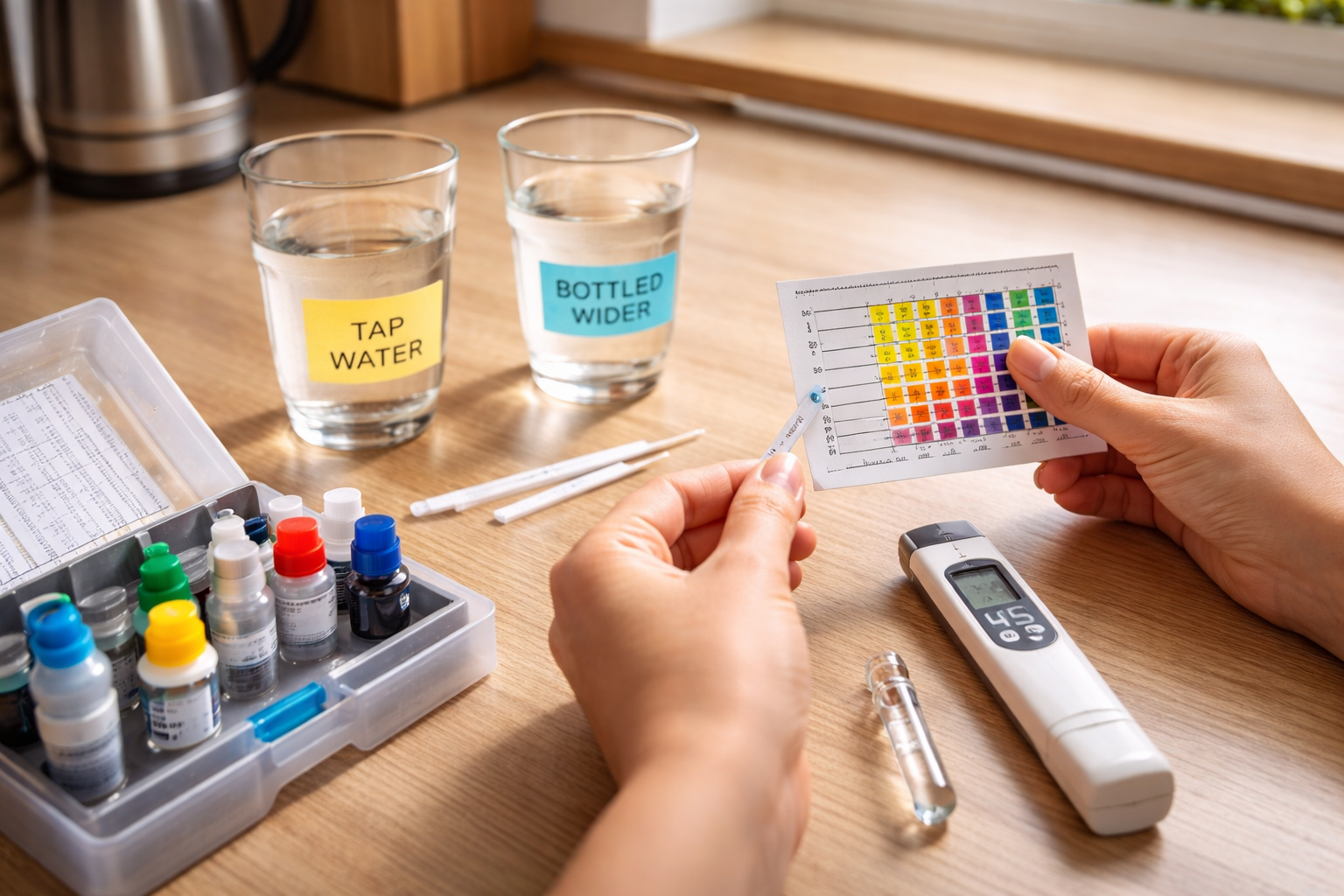
You can then compare that bottled water with the water that comes from your tap.
This helps you answer a few practical questions:
Does the bottled water actually differ from your tap water?
Are the mineral levels different?
Is there a noticeable difference in dissolved solids or pH?
Is the bottled water really providing something different?
Running a quick comparison can give you real data rather than relying on assumptions or marketing claims.
What to Compare When Testing Water
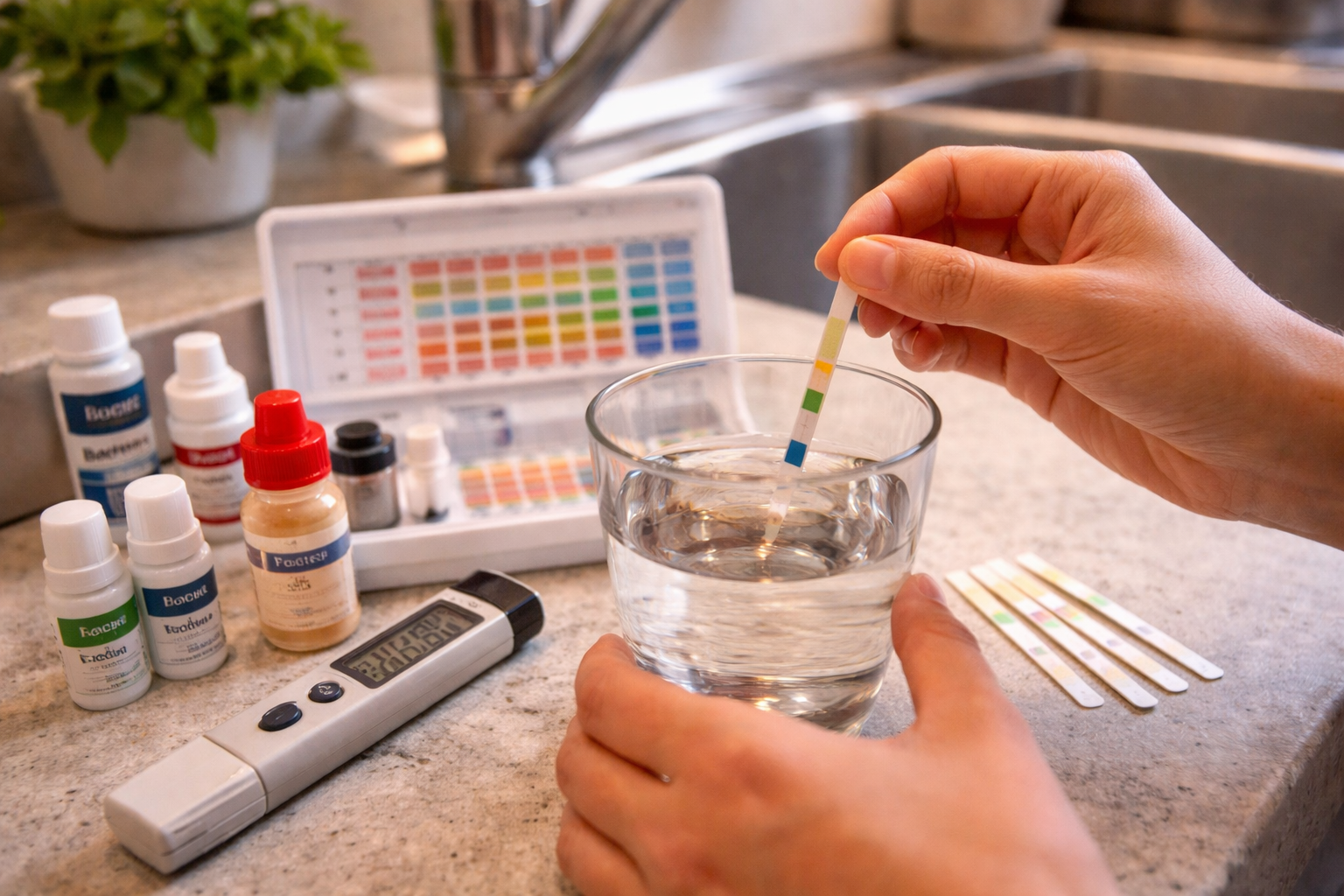
When comparing bottled water and tap water, a home testing kit can measure several useful indicators.
Total Dissolved Solids (TDS)
This measures the amount of dissolved minerals in water, such as calcium, magnesium, and salts.
Different water sources can vary significantly in TDS levels.
pH Levels
pH indicates how acidic or alkaline water is. Most drinking water typically falls within a safe neutral range.
Chlorine
Tap water often contains chlorine because it is used during water treatment to kill bacteria. Bottled spring water usually does not contain added chlorine.
Heavy Metals
Some water testing kits can detect metals such as lead or copper, which may enter water through plumbing systems.
A Simple Experiment You Can Try
If you are curious about the differences between water sources, you can run a simple comparison.
Test three samples:
Water from your kitchen tap
A bottle of water you are considering subscribing to
Water from any bottled supply you already use
Compare the results to see how the levels differ.
You may find that some water sources contain higher mineral levels, while others are closer to purified water.
Why Testing First Can Be Useful
Testing bottled water before subscribing helps you make a decision based on evidence rather than assumptions.
You may discover that:
your tap water already has good mineral balance
bottled water tastes different but tests similarly
mineral content varies depending on the water source
Ultimately, comparing water sources yourself gives you a clearer understanding of what you are actually drinking.
The Bottom Line
Both tap water and bottled water can be safe to drink depending on their source and treatment. But if you are considering a bottled water subscription, it can be worth taking a few minutes to test the water first and compare it with your tap water.
A simple home testing kit can provide useful insights and help you decide which option works best for your household.