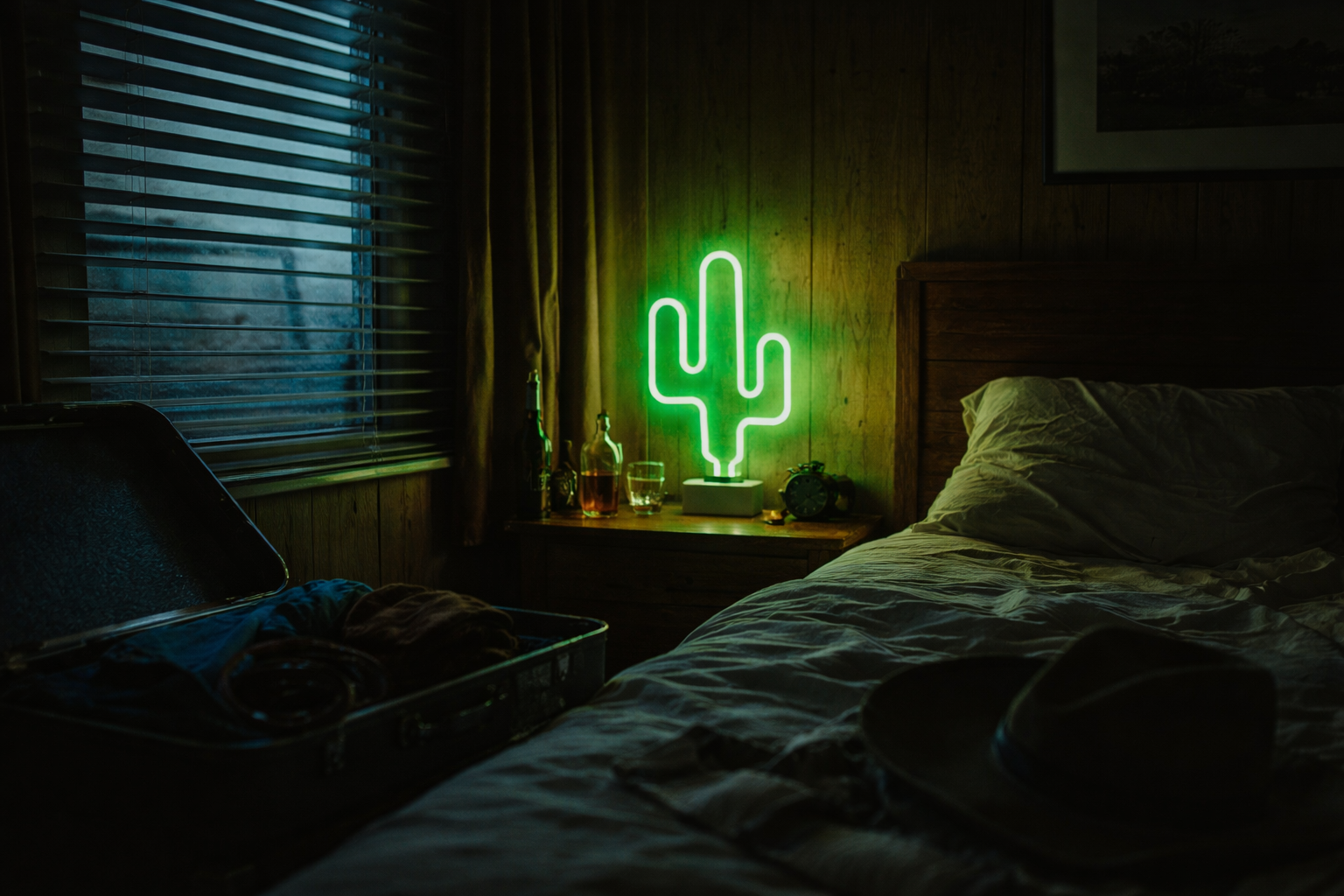
Walk into any trendy apartment, dorm room, or home bar in 2026, and you might spot it glowing in the corner. It isn’t real. It doesn’t need water. But it emits a warm, green hum that instantly sets the mood.
The neon cactus light has quietly become one of the most popular decorative lighting pieces of the decade. Part nostalgia, part irony, and genuinely functional as ambient lighting, these sculptural pieces have moved from novelty gift to legitimate interior design staple.
What Exactly Is a Neon Cactus?
This is where most buyers get confused. The majority of “neon” cactus lights on the market are not neon at all. They are LED-flex lights behind acrylic rods. They mimic the look, but the glow is cool, flat, and obviously plastic.
True neon uses argon gas and hand-bent glass tubing. It produces a warmth and depth that LED cannot replicate. If you have only ever seen the acrylic versions, you have not actually seen neon. A real glass neon cactus light has weight, character, and that distinctive hum. It is the difference between a print and an oil painting.
Why a Cactus?
The appeal is surprisingly layered. On the surface, the cactus is an instantly recognizable symbol of the American Southwest and desert landscapes. It evokes road trips, Palm Springs architecture, and retro souvenir culture.
But the cactus also works because of its simplicity. Unlike a neon animal or human figure, the cactus is abstract enough to read as pure shape. It is graphic. It sits comfortably next to a mid-century sofa or a cluttered plant shelf without competing for attention.
There is also the humor factor. A plant that cannot survive cold weather or low light is rendered eternally glowing. A happy compromise for those who have killed the real thing.
Where Are They Being Used?
The versatility of the neon cactus explains its staying power.
Bars and home bars were early adopters. The green glow reads as tropical or retro-diner depending on context. It signals “open” without a literal sign.
Bedrooms and nurseries have become a major category. Parents report that the soft, steady light functions as a transitional nightlight that toddlers actually tolerate. Unlike character lamps that get outgrown, the cactus reads as “cool” across age groups.
Dorm rooms treat them as personality pieces. A neon cactus is more interesting than a salt lamp and more conversational than a standard desk light.
Airbnb hosts have caught on. A cactus in the corner photographs well and telegraphs that the space is curated.
What to Look for When Buying
If you are shopping for a neon cactus light, the market has matured enough that quality varies significantly. You need to know what you are actually buying.
Glass versus acrylic is the main decision. Acrylic LED units are lightweight, shatterproof, and inexpensive. But they are backlit. The light comes from behind the plastic, not from within the tube itself. A handmade glass neon sign glows from the gas inside. It is richer, warmer, and casts genuine ambient light rather than a flat coloured strip.
The base matters. Lower-cost acrylic units often ship without a proper stand, forcing buyers to prop the light against a wall. Quality glass units typically include a weighted concrete or wooden base. The Smithers version features a concrete plinth that keeps the 41cm fixture stable on any surface.
Power source is a lifestyle decision. Battery-operated units offer placement flexibility but require frequent replacement. USB units are convenient for desks. True glass neon requires a 12v mains connection, which means consistent brightness and zero battery waste.
Light quality separates cheap from premium. Inexpensive LED units often use harsh, cool-blue LEDs behind green acrylic, producing an artificial teal. Real argon gas in green glass produces a true emerald tone with subtle variation along the tube. It glows, not just lights up.
Size should be intentional. A 12-inch cactus is a desk accent. An 18 to 24-inch piece becomes architectural. At 41cm tall, this green glass cactus lamp hits the sweet spot: visible enough to anchor a shelf or bedside table, compact enough for a dorm or flat.
The Bottom Line
The neon cactus has survived the fate of most decorative trends because it is genuinely useful. It provides light without glare. It adds color without committing to paint. It is playful without being childish.
But there is a widening gap in this category. The market is flooded with cheap LED acrylic approximations. They serve a purpose, but they are disposable. Real glass neon is not disposable. It is made by hand, bent by heat, and filled with gas. It is a small craft object, not a mass-produced plastic moulding.
Whether you view the cactus as ironic kitsch or sincere decor, one thing is clear: the desert plant has found its second life in electricity. And if you are going to invite it into your home, you might as well buy the one that actually glows.