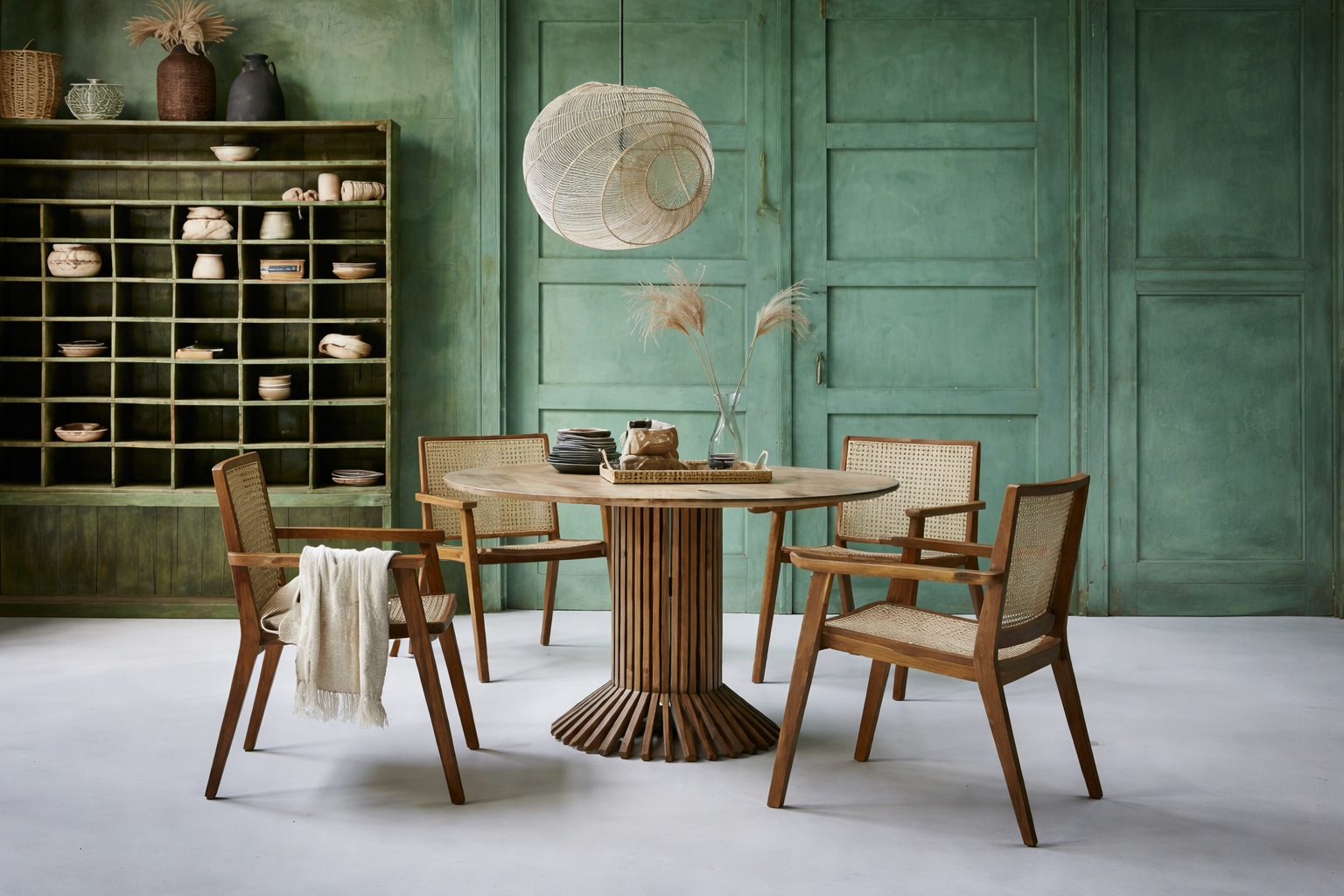
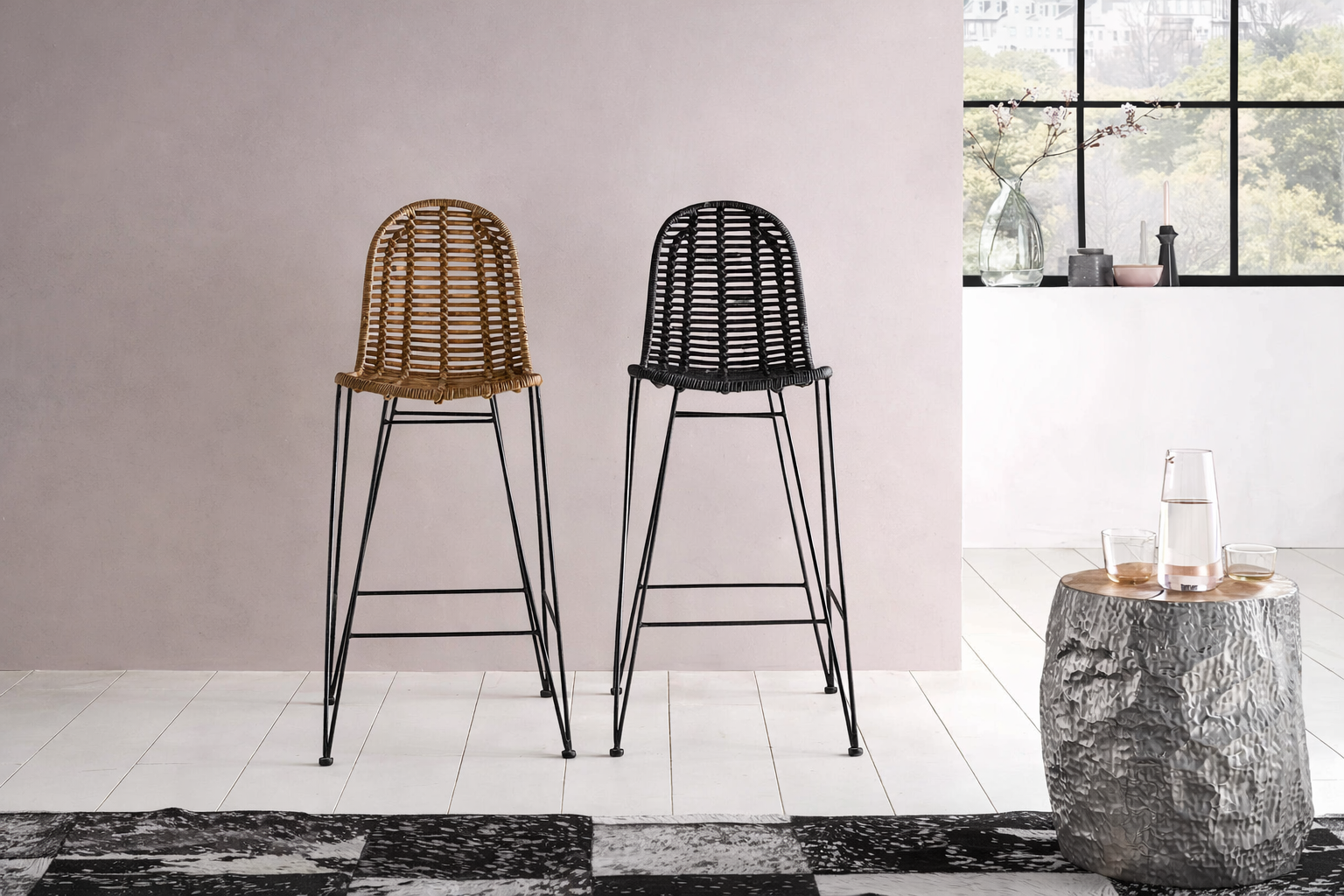
The rattan chair is far more than just a place to sit. It is a piece of design history, a symbol of leisure, and a testament to the enduring appeal of natural materials. From the bustling terraces of Parisian cafés to the serene living rooms of Southeast Asia, chairs with rattan have woven their way into the global design landscape. This article explores the fascinating story of this iconic furniture piece, from its origins in tropical forests to its status as a beloved design classic.
What is Rattan? Understanding the Material
Before understanding the chair, one must understand the material. Rattan is not, as is commonly mistaken, a type of wood or the same as wicker. It is a naturally occurring climbing palm from the genus Calamus, native to the tropical rainforests of Southeast Asia, including Indonesia, the Philippines, and Malaysia . Unlike bamboo, which is hollow, rattan has a solid core, which gives it remarkable strength and the ability to be bent into graceful, curved shapes . This unique combination of flexibility and durability is what makes it ideal for furniture making .
It is also important to distinguish between related terms. Wicker refers to the process of weaving, not the material itself. Wicker furniture is often made using rattan. Cane is another term for the outer bark of the rattan vine, which is peeled off and used for weaving seat bottoms and chair backs .
A Journey Through Time: The Global History of the Rattan Chair
The story of the rattan chair is one of global trade, cultural exchange, and ingenious design.
Early Beginnings in Asia: The use of rattan dates back centuries in its native Southeast Asia, where local craftspeople used it to create baskets and simple furniture . Its journey West began in the 16th century, when Portuguese and Spanish explorers, venturing into Asia for spices, recognized the utility of this lightweight, strong material and brought it back to Europe .
European Adoption and the English Connection: By the 19th century, rattan had become a common material in Europe. A key moment in its history was its arrival in England around 1660. The early development of the English rattan seat was heavily influenced by designs from Ming Dynasty China, showcasing an early example of East-West design fusion . Rattan furniture became a symbol of exotic luxury, particularly within the context of the British Empire’s colonial presence in tropical regions .
The Iconic French Bistro Chair: Perhaps the most culturally significant rattan chair is the classic French bistro chair. Since the 17th century, these chairs, with their woven seats and curved frames, have become inseparable from Parisian café culture. They line the boulevards of the capital, stacked high in the mornings and eagerly awaiting customers by afternoon, embodying the city’s famous terrace lifestyle .
Mid-Century Modernism and a Global Shift: The mid-20th century was a golden age for rattan chair design. Modernist architects and designers in Europe and America, such as the Danish Arne Jacobsen and Nanna Ditzel, and the Italian Franco Albini, were captivated by the material’s potential . Ditzel, often called the “First Lady of Danish Design,” created groundbreaking pieces like the cocoon-like “Hanging Egg Chair” (1959) . Albini’s “Margherita” chair (1951) became so iconic that it is now part of the permanent collection at the Museum of Modern Art (MoMA) in New York .
During this period, production began to shift to low-cost, high-skill manufacturing centres in Southeast Asia. Ironically, as these Western designs were manufactured in countries like Indonesia and the Philippines, they became so thoroughly integrated into the local visual landscape that they are now often mistaken for indigenous designs.
Rank
Chair Name
Designer / Origin
Year
Significance (The “Why”)
1
French Bistro Chair
Maison Drucker (Paris)
c. 1885+
The Cultural Icon. Defines the Parisian terrace aesthetic globally.
2
Margherita Chair
Franco Albini (Italy)
1951
The Museum Piece. Held in MoMA; defines Mid-Century Modern rattan.
3
Hanging Egg Chair
Nanna Ditzel (Denmark)
1959
The Statement Piece. Revolutionized rattan as a sculptural, hanging form.
4
Kowloon Child’s Chair
Chan Kin-fai (Hong Kong)
1950s
The Innovator. Introduced PVC-coated rattan for durability.
5
TT54 Chair
J. Schneider-Esleben
1954/2016
The Hybrid. Perfect blend of steel frame and natural rattan skin.
6
Corso Chair
Robert Stadler
2019
The Modern Revival. Solves the moisture problem with aluminum legs.
Notable Designs: A Closer Look at Key Models
The term “rattan chair” encompasses a vast range of styles. Here are a few specific, historically significant models:
The Egon Eiermann E 10 (1949)
Designed by the renowned German architect Egon Eiermann, the E 10 is a masterpiece of structural integrity. Its unique, funnel-like shape, reminiscent of an abstract flower, achieves its stability not from a rigid frame, but from its complex braided rattan structure. It is a perfect example of form following function and is a celebrated piece of post-war German design .
The Kowloon Rattan Ware Co. Child’s Chair (mid-1950s)
This simple child’s chair, attributed to Chan Kin-fai of Hong Kong’s Kowloon Rattan Ware Co., tells a story of industrial innovation. At a time when Hong Kong was a booming manufacturing hub, Chan adapted an extrusion method from the electrical industry to create PVC-coated rattan . This made the chairs easier to clean and more durable, and they became a ubiquitous prop in children’s portrait photography in Hong Kong throughout the 1950s and 60s .
The Jindrich Halabala Chair (c. 1930s)
While the provided search results only offer a brief mention of the designer in relation to “Ratan,” Halabala was a hugely influential Czech designer whose bentwood and upholstered furniture defined the Functionalist and Art Deco styles in Central Europe. A search for his work reveals elegant, functional forms. The inclusion of his name in the query highlights how the term “Ratan” (a common misspelling of rattan) can sometimes be associated with other designers or misattributed.
The Robert Stadler Corso Chair (2019)
Produced by the historic Parisian manufacturer Maison Drucker (founded 1885), the Corso Chair represents a 21st-century reimagining of the classic French bistro chair. Designer Robert Stadler kept the traditional hand-woven rattan back and seat but replaced the rattan legs, which are prone to moisture damage, with industrial powder-coated aluminum . This ingenious hybrid pays homage to its history while improving its durability and stackability for modern use .
The Richard Lampert / J. Schneider-Esleben TT54 (2016)
Originally designed by German architect J. Schneider-Esleben in 1954, this chair is a study in minimalist construction. It features a simple, distinctive frame made of powder-coated steel rod, which holds a seat and backrest woven from natural rattan. It demonstrates how rattan can be used not just as a structural element, but as a soft, textural contrast within an industrial design .
Care, Durability, and Sustainability
Rattan furniture is prized for its longevity. Vintage pieces from a century ago are often found in excellent condition . However, it does require some care. To prevent it from drying out and cracking, it should not be placed in direct sunlight or near heat sources. Cleaning is best done with a soft cloth or a vacuum cleaner, using water very sparingly, as moisture can lead to mold and rot .
In our current era, rattan has seen a major resurgence in popularity. This is partly due to its natural, warm aesthetic that fits perfectly with biophilic design trends, but also because it is a sustainable and renewable resource . Supporting the rattan industry also helps preserve the skilled craftsmanship of the artisans who weave these intricate pieces, ensuring this ancient art form is passed down through generations .
From the tropical forests where it grows to the design museums where it is preserved, the journey of the rattan chair is a rich and ongoing story. Whether it’s a vintage heirloom, a post-war modernist icon, or a contemporary hybrid design, the rattan chair remains a beloved and enduring piece of our material culture.