
A well-designed living room does not always need perfectly matching furniture. In fact, some of the most interesting interiors feel as though they have developed gradually over time, combining vintage pieces, modern furniture, natural materials and decorative details collected from different places and periods.
One of the easiest ways to bring those elements together is through the rug. Detailed Persian Rugs can provide the colour, pattern and visual structure needed to connect vintage furniture with a cleaner contemporary interior. A traditional rug beneath a leather sofa, reclaimed wood coffee table or antique cabinet can make separate pieces feel like part of one considered design.
The key is balance. Vintage furniture already brings character to a room, so the rug should complement that personality rather than compete with it. Get the scale, colours and placement right, and the result can feel layered and individual without becoming cluttered or overly traditional.
Why Vintage Furniture and Persian Rugs Work So Well Together
Vintage furniture and Persian rugs share one important quality: neither needs to look completely new to feel valuable.
A reclaimed cabinet may show marks from years of use. A leather chair can develop a natural patina. A vintage rug may have softened colours or variations that contribute to its character.
Placed together, these elements create an interior that feels collected rather than manufactured as a matching set.
Persian-inspired rugs are also useful because they frequently contain several complementary colours within one design. A single rug might include rust, navy, cream, muted green and warm red.
Those colours can visually connect different furniture finishes throughout the room.
For example, a rug containing warm rust and navy might work with a brown leather sofa, dark wooden cabinet, blue cushions and brass lighting without requiring any of those elements to match exactly.
Start with the Furniture You Already Have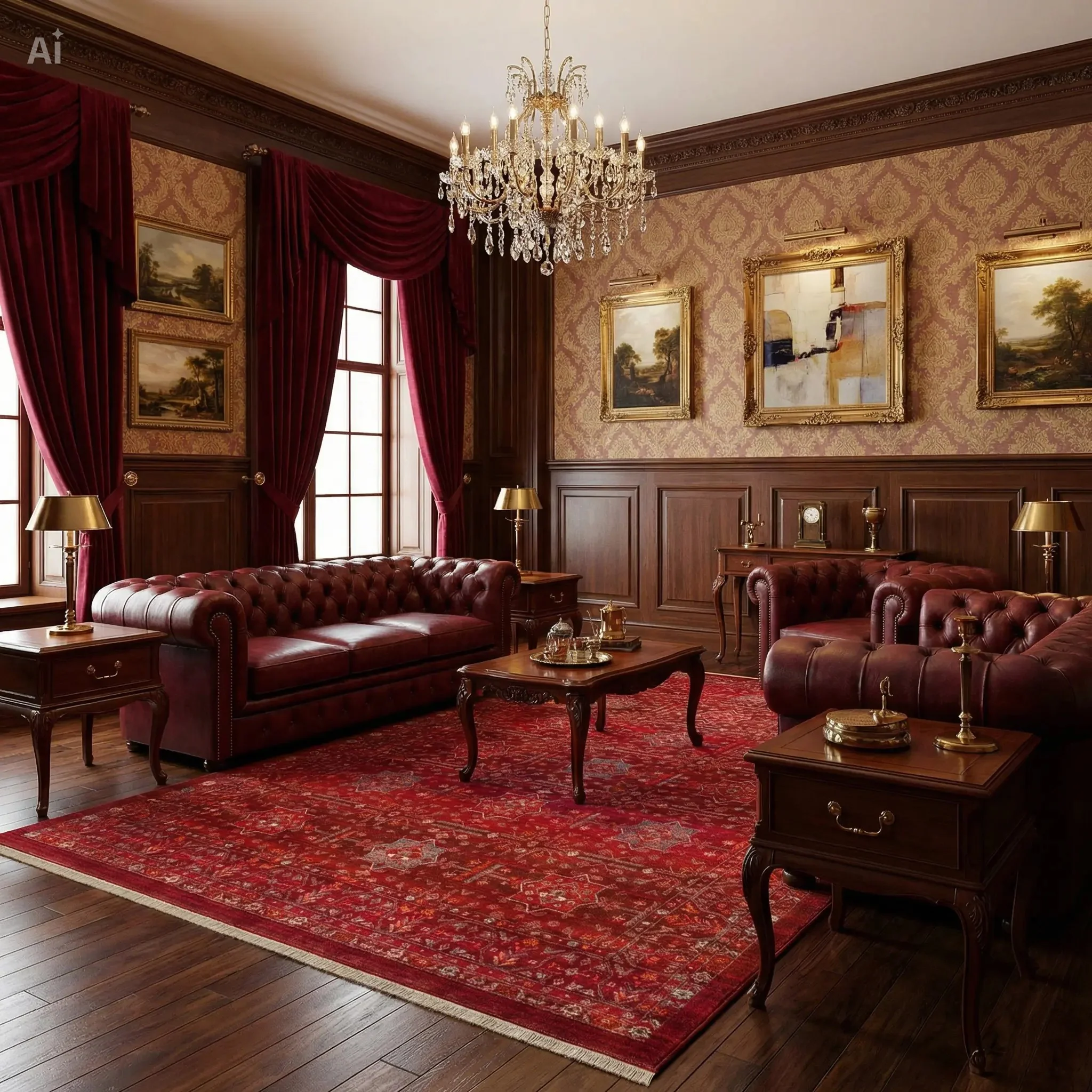
Before choosing a rug, look at the furniture that will remain in the room.
The dominant materials, colours and scale of those pieces should influence the rug you choose.
Vintage Leather Sofas
Leather and Persian-style rugs are a natural combination.
A brown or tan leather sofa already introduces warmth, so rugs in deep red, burgundy, navy, cream and muted green can work particularly well.
A heavily aged leather sofa may look especially good with a faded or distressed rug because neither element appears overly polished.
Black leather can feel visually heavy, so a lighter or mid-tone rug may create better balance.
Reclaimed Wood Furniture
Reclaimed timber often contains several natural tones rather than one uniform finish.
That makes it easy to pair with traditional rugs.
Rust, olive, cream, muted blue and warm red can complement oak, pine, walnut and reclaimed wood without trying to reproduce the exact colour of the furniture.
The rug can also soften the heavier visual presence of large wooden cabinets, sideboards and coffee tables.
Industrial Furniture
Industrial interiors often include black metal, dark timber, concrete and exposed brick.
While these materials create strong character, they can also make a living room feel visually hard.
A traditional rug introduces softness at floor level and provides contrast against metal and concrete.
This combination works particularly well when the rug includes warmer colours such as rust, red, ochre or cream.
Antique Cabinets and Sideboards
An antique cabinet can become a strong focal point, but if the rest of the furniture is modern, the piece may feel isolated.
A rug containing tones that relate to both the antique furniture and modern seating can create a visual bridge between them.
You do not need an exact colour match. The connection can be subtle.
Choose a Rug That Complements Rather Than Competes
One of the easiest styling mistakes is combining too many statement pieces.
If your furniture already contains strong carving, bold upholstery or unusual shapes, a slightly calmer rug may create better balance.
If your furniture is relatively simple, you can allow the rug to carry more of the room’s decorative detail.
A useful approach is:
Detailed furniture + quieter rug
Simple furniture + stronger patterned rug
This does not mean the room must become neutral. It simply helps establish a hierarchy so every object is not competing for attention at the same time.
Best Persian Rug Colours for Vintage Interiors
Colour often determines whether a rug feels integrated or added as an afterthought.
Deep Red and Burgundy
These traditional tones work particularly well with:
- Brown leather
- Dark walnut
- Antique brass
- Cream upholstery
- Warm wooden flooring
Red does not need to dominate the entire rug. Even smaller touches can create warmth.
Navy and Blue
Blue is useful when you want traditional detail without making the room feel overly warm.
Navy can complement:
- Grey modern sofas
- Dark wooden cabinets
- Brass accessories
- Mid-century furniture
- Cream walls
Faded blue designs can also work well in rooms that mix vintage pieces with a lighter modern interior.
Cream and Beige
A lighter rug can balance heavy furniture.
Cream, beige and ivory designs are particularly effective when a room contains:
- Dark leather
- Large wooden pieces
- Limited natural light
- Several vintage accessories
The rug still adds texture and pattern without introducing another large area of strong colour.
Rust, Olive and Earthy Tones
Earthy palettes work naturally with reclaimed timber and industrial-style furniture.
Rust, olive, faded gold and brown create a relaxed atmosphere and can help connect different wood finishes within the room.
How to Mix Vintage Furniture with Modern Pieces
A successful vintage interior does not require every piece to be old.
In many cases, mixing periods creates a more interesting result.
Consider combinations such as:
- Vintage sideboard with a modern sofa
- Antique cabinet with contemporary lighting
- A leather club chair beside a glass coffee table
- Reclaimed wooden table with clean-lined seating
- Industrial storage cabinet with neutral upholstery
The rug can become the element that visually connects these contrasting styles.
A detailed traditional rug beneath modern furniture prevents the contemporary pieces from feeling too plain, while the modern furniture stops the room from becoming overly formal or historical.
Use the Rug to Define the Seating Area
The rug should relate to the furniture rather than appear isolated in the centre of the room.
Front Sofa Legs on the Rug
This is one of the most reliable layouts.
Place the front legs of the sofa and chairs on the rug while leaving the rear legs on the main floor.
This arrangement connects the seating without requiring an extremely large rug.
All Furniture on the Rug
In larger rooms, placing most or all of the main seating on the rug can create a more luxurious and structured layout.
It also works well in open-plan spaces where the living area needs to be visually separated from the dining or kitchen zone.
Smaller Rug in Front of the Sofa
A smaller decorative rug can sit entirely in front of the sofa.
This works best when the rug has a strong design worth keeping visible.
However, it should still relate proportionally to the furniture. A very small rug beneath only the coffee table can make the room feel fragmented.
What Rug Size Works Best with Vintage Furniture?
Vintage furniture can have significant visual weight, particularly large leather sofas, wooden cabinets and industrial pieces.
An undersized rug can make those elements feel even more disconnected.
| Room Type | Rug Size to Consider | Typical Layout |
| Small | 120 × 170 cm | Mostly in front of sofa |
| Small to Medium | 160 × 230 cm | Front sofa legs on rug |
| Medium to Large | 200 × 290 cm | Sofa and chairs connected |
| Large | 240 × 340 cm+ | Most furniture on rug |
These are starting points rather than strict rules.
Measure your actual furniture arrangement before choosing a rug.
Persian Rugs with Vintage Leather Furniture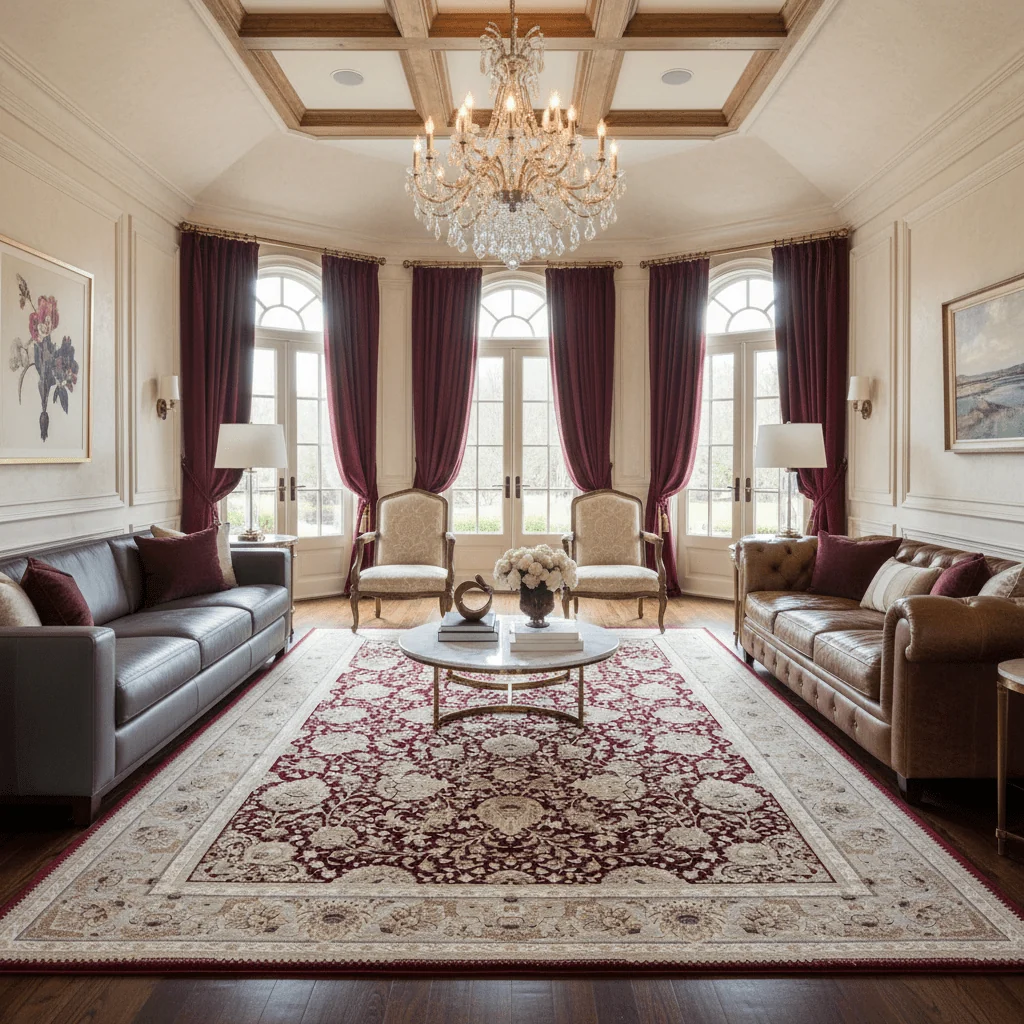
Leather is one of the easiest vintage materials to pair with a traditional rug.
Brown Leather
Try deep red, navy, cream or muted multicolour patterns.
Tan Leather
Tan works well with blue, faded red, green and softer distressed designs.
Black Leather
A lighter rug can stop the lower half of the room from feeling too heavy.
Cream, muted red and faded traditional patterns can work particularly well.
Aged Leather
Leather with visible patina often looks best with a rug that also has a softer or more lived-in appearance.
A distressed Persian-style design can create a relaxed combination.
Persian Rugs with Reclaimed and Rustic Wood
Traditional rugs work naturally with wooden furniture because both introduce warmth and texture.
Light oak can look good with stronger red, navy or geometric patterns.
Dark walnut may benefit from lighter cream, blue or faded designs.
Reclaimed timber containing several tones is particularly versatile because many traditional rugs also include multiple colours.
Rather than matching the wood exactly, look for a rug containing one or two related warm tones.
Persian Rugs in Industrial Interiors
Industrial furniture can sometimes make a room feel visually cold.
A rug helps by introducing softness and pattern.
Against exposed brick, black metal and dark timber, a traditional rug can create a strong contrast.
This works particularly well in interiors containing:
- Industrial shelving
- Metal-framed coffee tables
- Reclaimed cabinets
- Factory-style lighting
- Exposed brick
- Concrete-effect floors
The traditional pattern does not weaken the industrial style. Instead, it can make the room feel more comfortable and lived-in.
Traditional vs Distressed Persian Rugs
Both styles can work with vintage furniture, but they create different moods.
| Feature | Traditional Rug | Distressed Rug |
| Colour | Rich and defined | Muted and faded |
| Overall Feel | Formal | Relaxed |
| Best With | Antique and classic pieces | Modern-vintage mixes |
| Visual Impact | Strong | Softer |
| Ideal Room | Formal lounge | Everyday living room |
A highly traditional rug may suit a room with antique furniture and symmetrical styling.
A distressed design often works better when vintage furniture is being mixed with contemporary pieces.
Layering Rugs in a Vintage Living Room
Layering can make a room feel even more collected.
One approach is to place a smaller Persian-style rug over a larger neutral base rug.
A plain natural-textured rug beneath provides scale, while the patterned rug creates the focal point.
This technique works particularly well when you have found a distinctive rug that you love but it is slightly too small to anchor the entire seating arrangement on its own.
The base rug should usually remain quieter so the two patterns do not compete.
How to Match Cushions, Curtains and Accessories
You do not need to reproduce every rug colour elsewhere in the room.
That often makes the interior feel too coordinated.
Instead, choose one or two colours from the rug and repeat them subtly.
For example:
- Pick up a faded blue in cushions
- Repeat rust through a throw
- Use brass lighting with warm gold tones
- Introduce green through plants or ceramics
Curtains can remain neutral if the rug is highly patterned.
This gives the room breathing space.
Lighting Ideas for Vintage Furniture and Persian Rugs
Lighting can dramatically influence how rug colours and vintage materials appear.
Warm-toned lighting tends to enhance leather, natural wood and traditional rug colours.
Consider:
- Brass floor lamps
- Industrial pendant lights
- Vintage-style table lamps
- Simple contemporary wall lights
The fixtures do not all need to be vintage.
Mixing a traditional rug and antique furniture with cleaner modern lighting can stop the room from feeling too themed.
Common Styling Mistakes to Avoid
1. Using Too Many Antique Pieces
A room does not need to look like an antique shop to have vintage character.
Use a few stronger pieces and give them visual space.
2. Choosing a Rug That Is Too Small
An undersized rug can make large furniture feel disconnected.
3. Matching Every Colour Exactly
Related tones usually look more natural than perfect matches.
4. Using Too Many Patterns
If the rug is detailed, allow sofas, curtains or walls to remain calmer.
5. Ignoring Scale
Large furniture needs a rug with enough visual presence to balance it.
6. Making the Room Feel Like a Showroom
Rooms feel more personal when they include variation rather than perfectly coordinated sets.
7. Forgetting Practical Traffic Flow
Beautiful furniture placement still needs to allow people to move comfortably through the room.
How to Make the Room Feel Collected, Not Cluttered
The goal of mixing vintage furniture and traditional rugs is character, not visual overload.
Leave some empty space between important pieces.
Avoid filling every wall and surface with decorative objects.
Use one or two statement pieces rather than making everything compete.
A large rug can help because it visually connects different furniture styles and gives the eye one consistent foundation.
Neutral walls can also provide useful breathing space when the furniture and rug contain stronger colours.
Quick Styling Combinations
| Furniture | Rug Style to Consider |
| Brown leather sofa | Deep red or navy Persian rug |
| Reclaimed wood cabinet | Rust, olive or cream rug |
| Grey modern sofa + vintage sideboard | Navy or faded Persian rug |
| Industrial metal furniture | Warm distressed rug |
| Cream modern sofa + antiques | Rich traditional Persian rug |
| Dark walnut furniture | Lighter cream or blue rug |
| Tan leather chair | Faded red or geometric rug |
Final Thoughts
Mixing vintage furniture with Persian rugs works best when the room feels naturally developed rather than carefully matched.
Start with the pieces you already love.
Look at their materials, scale and colours before choosing a rug. Use the rug to connect different styles rather than trying to make everything belong to the same period.
A traditional rug can soften industrial furniture, add warmth beneath vintage leather and help modern seating sit comfortably beside antique cabinets or reclaimed wood.
Most importantly, leave enough visual space for each element to have its own character.
When old and new are balanced carefully, the result is a living room that feels personal, layered and genuinely lived in rather than designed around a single trend.
Frequently Asked Questions
Do Persian rugs work with vintage furniture?
Yes. Persian-style rugs can work particularly well with vintage furniture because both bring colour, texture and character into a room. Traditional patterns also complement materials such as leather, dark wood, brass and reclaimed timber.
What colour Persian rug goes with brown leather furniture?
Deep red, burgundy, navy, cream, olive and muted multicolour rugs can all work with brown leather. The best choice also depends on flooring, wall colour and the amount of natural light in the room.
Can I mix modern furniture with antique furniture and a Persian rug?
Yes. Mixing modern and antique furniture can create a more individual interior. A traditional rug can help connect the contrasting styles by introducing colours that relate to both old and new pieces.
What rug size works best with a vintage sofa?
The rug should generally be large enough to relate to the sofa and surrounding seating. For many living rooms, placing the front sofa legs on the rug provides a balanced arrangement.
Are distressed Persian rugs better for modern-vintage interiors?
They can be particularly effective because faded colours soften the traditional pattern. This often makes distressed designs easier to combine with contemporary sofas and modern lighting.
Do Persian rugs work with industrial furniture?
Yes. Traditional rugs can soften the appearance of black metal, exposed brick, concrete and reclaimed wood while adding warmth and pattern to industrial interiors.
Should a rug match vintage furniture exactly?
No. Exact matching is unnecessary. Look for shared or complementary tones rather than trying to reproduce the exact furniture colour in the rug.
Can I layer a Persian rug over another rug?
Yes. A smaller patterned rug can be layered over a larger neutral or natural-textured rug. This is particularly useful when you want to display a distinctive rug while still creating enough scale for the seating area.
