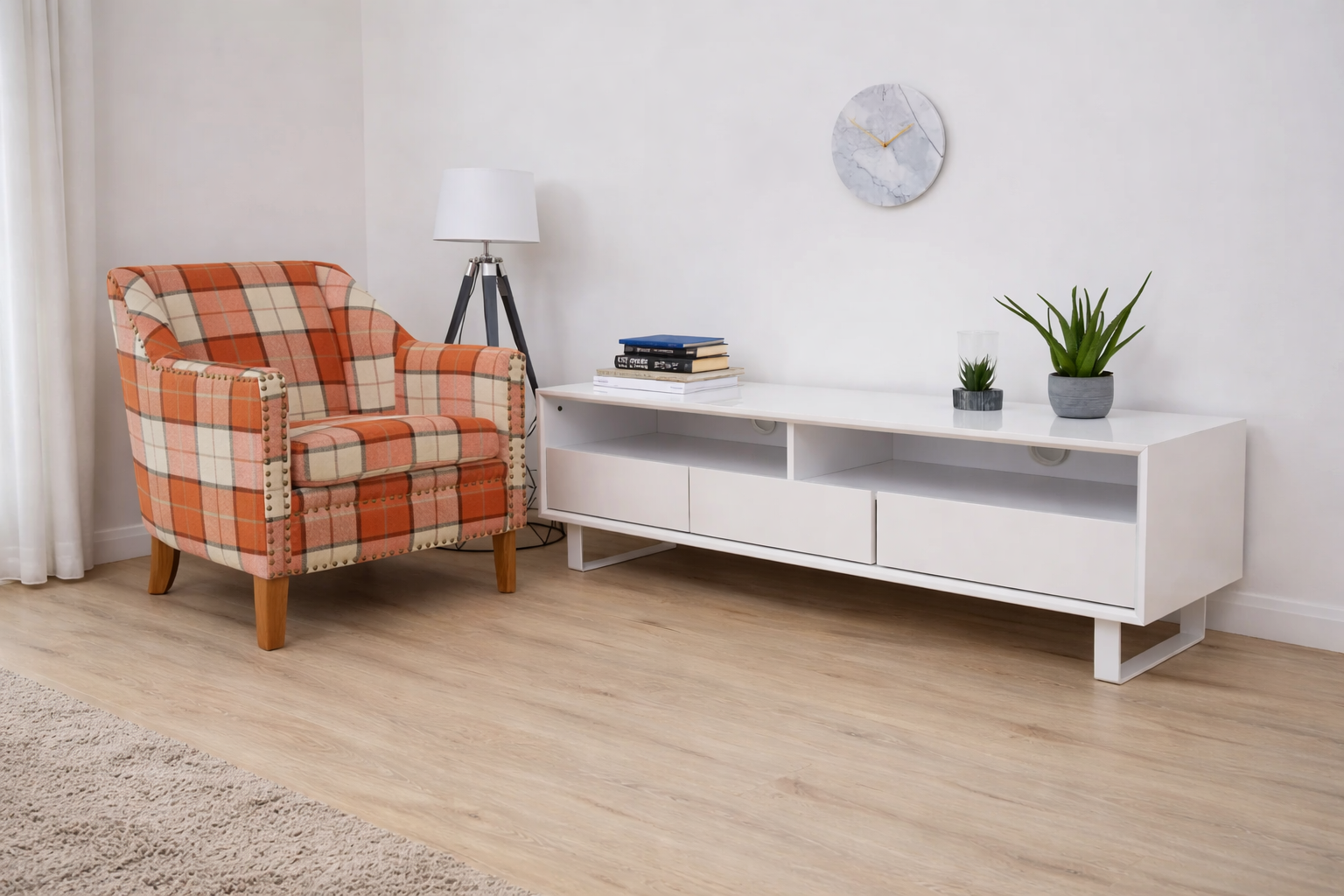
I see it every single day. A young couple walks into a big-box baby store, starry-eyed and excited, and drops $800 on a nursery set that looks like it belongs in a magazine. Fast forward two years: the toddler spills a sippy cup of juice, the bottom drawer falls off its track, and the whole thing ends up on the curb because it’s literally falling apart.
I tell parents all the time: You don’t have to spend a fortune, but you do have to know what you’re touching. Stop buying fancy shit.
If you want to save money and frustration, you need to learn how to shop like a pro. Here is the blunt, no-nonsense truth about buying furniture for your family.
1. The “Flip It” Rule
Before you fall in love with the finish or the trendy brass handles, do one thing: Flip the piece over or look at the back.
If you see staples holding the back panel on, or those little silver cam locks (the circular screws you see in flat-pack furniture), walk away. Those are the red flags of “disposable” furniture. Cam locks are designed for easy shipping, not for a lifetime of use. Once they wiggle loose—and with kids, they will wiggle loose—the structural integrity of the piece is gone forever.
2. The One-Spill Death Sentence
Here is the difference between “Engineered Wood” and the real deal:
Particleboard/MDF: It’s essentially sawdust and glue. If a glass of water sits on it for twenty minutes, the fibers swell. Once it “puffs up,” it’s done. You can’t sand it, you can’t shrink it, and you can’t fix it.
Solid Wood: It can take a beating. Your kid hits it with a toy truck? It’s a “character mark.” They draw on it with a Sharpie? You can sand it down and refinish it. You can’t kill solid wood.
3. The Real Budget Hack: The 1980s
If you’re on a budget, don’t go to the “affordable” big-box stores. Go to Facebook Marketplace, Craigslist, or local consignment shops.
I’ve seen solid oak dressers from the 1980s—the kind that are heavy enough to require two people to lift—going for $150. Are they a little “dated” looking? Maybe. But a $10 bucket of paint or a new set of hardware can make an 80s oak dresser look like a $1,200 piece from a high-end boutique.
That 40-year-old dresser has already survived one generation of kids; it will easily survive yours.
4. The IKEA Exception
Look, I know we can’t all spend our weekends hunting for vintage oak. If you have to buy new and you’re on a budget, look for solid pine.
IKEA’s HEMNES series is a great example. Is it the hardest wood in the world? No. Pine is soft and it will get little dings and scratches over time. But it is real wood. Because it’s real, it’s repairable. You can tighten the screws, you can wood-fill the holes, and you can repaint it when it gets ugly.
But please, don’t pay $400 for anything labeled “engineered wood” or “wood veneers over MDF.” That’s just a fancy name for cardboard.
5. Demand Transparency
If you’re shopping online and the brand won’t tell you straight up what the piece is made of, assume it’s junk.
Quality brands are proud of their materials. They’ll shout “Solid Maple” or “Kiln-Dried Hardwood” from the rooftops. If the description uses vague terms like “wood composites” or “reclaimed materials” without being specific, they are hoping you won’t notice you’re buying glorified paper.
The Bottom Line
Your home is going to be a high-traffic zone for the next 18 years. Don’t waste your hard-earned money on furniture that isn’t built to survive a single spill or a move across town.
Flip it over. Check the joints. Buy the wood. Your wallet (and your sanity) will thank you