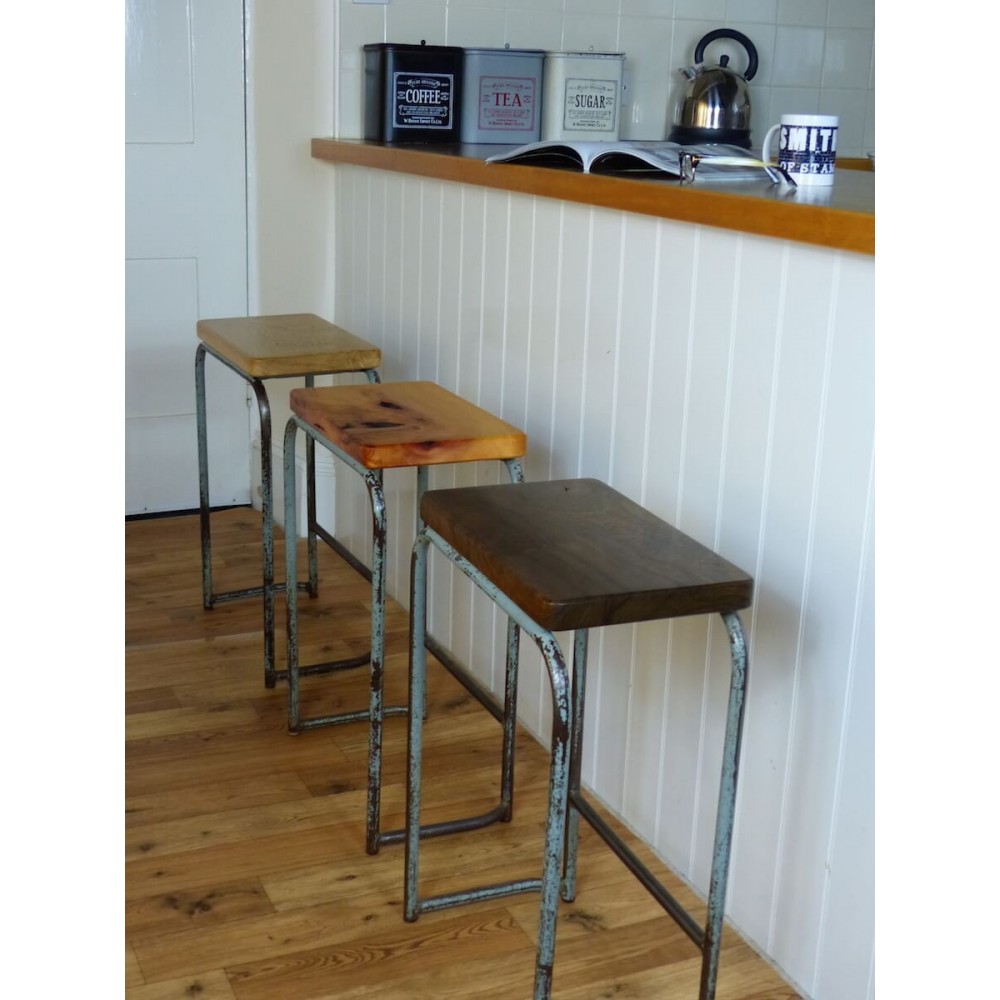
In the world of interior design, we often chase the “new.” But sometimes, the soul of a room isn’t found in a glossy catalog—it’s found in the worn leather, the patinaed chrome, and the solid, heavy frame of a piece that has lived a life before you.
More than just a place to sit, a vintage bar stool is a functional sculpture. Whether you’re outfitting a basement home bar, a kitchen island, or a coffee shop, these stools bring instant character that mass-produced models simply cannot replicate.
The Golden Eras of Bar Stools
To understand the stool, you have to understand the era it came from.
The Industrial Age (Early 1900s – 1940s): These are the originals. Found in old soda fountains and pharmacies, these stools are all about cast iron and steel. They are heavy, durable, and feature simple, utilitarian lines. Look for four-legged bases with intricate footrest rings. They don’t swivel, but they have a gravity that anchors a room.
Mid-Century Modern (1950s – 1960s): The diner era. This is where the “spindle” stool became iconic. Think wire or wood spindles, curved bucket seats, and gleaming chrome. Upholstery shifted to vinyl (often in bright red, turquoise, or sunny yellow). These are the stools of Happy Days—perfect for a retro diner vibe.
The Industrial Revival (1970s-80s): As factories closed, their fixtures found new homes. This era leaned into raw materials: steel pipe bases, tractor-style seats, and a grungier, more mechanical aesthetic. These work brilliantly in modern lofts or breweries.
Why Choose Vintage? The “Secret Sauce”
Why hunt for an old stool when you can buy a new one on Amazon by tomorrow?
Quality of Materials: Vintage stools were built before “planned obsolescence.” The chrome is thick, the welds are solid, and the cast iron is real. You can’t bend this steel with your bare hands.
The Patina: A scratch on a new stool is a defect. A scratch on a vintage stool is “character.” The fading of the vinyl, the slight rust on the base—these are textures you pay a premium for in “distressed” modern pieces.
The Weight: This is a tactile thing. When you sit on a vintage stool, you know it. It doesn’t wobble or slide. The heavy base provides a security that modern lightweight stools lack.
The Buyer’s Guide: What to Look For
If you want to start hunting (estate sales, eBay, architectural salvage yards), keep this checklist handy:
The “Butt” Test: Sit on it. Does it rock? Wobbling usually means the mounting bracket or the foot ring is bent, which is fixable, but a cracked cast iron base is not.
The Mechanics: For swivel stools (common in Mid-Century models), give it a spin. It should move smoothly. Gritty movement can be cleaned, but a seized bearing is a headache.
The Upholstery: Don’t be scared of ripped vinyl or fabric. Reupholstering a round bar stool seat is one of the easiest DIY projects. In fact, it allows you to choose a modern fabric (like a performance velvet or waterproof Crypton) while keeping the vintage base.
Height Matters: Standard vintage counter height is 24 inches (for a 36″ counter). Vintage bar height is 30 inches (for a 42″ bar). Measure your counter before you fall in love.
Restoration 101: Bringing Them Back to Life
Found a rusty gem? Here is the quick fix:
For Chrome: Crumpled aluminum foil dipped in water. Rub the rusted chrome. The chemical reaction removes rust without scratching the metal.
For Wood: Clean with Murphy’s Oil Soap. Avoid sanding off the original varnish if you want to keep the value.
For Cast Iron: Wire brush the loose rust, then apply a paste of baking soda and water to neutralize. Finish with a coat of furniture wax (not spray paint) to keep the dark, aged look.
Styling the Modern Home
The best part about vintage bar stools is their versatility.
The Minimalist Kitchen: Three industrial steel stools under a stark white marble island create a perfect tension between cold and warm.
The Man Cave / Pub: Go for the deep button-tufted leather stools (Victorian or Edwardian revival) for a rich, whiskey-lounge feel.
The Eclectic Vibe: Mix and match! Two different eras of stools (e.g., one wood spindle, one chrome diner) pulled up to the same counter create a curated, “collected-over-time” look that feels very today.
Final Verdict
Don’t just buy a seat. Buy a story. Vintage bar stools offer a combination of durability, aesthetic depth, and historical charm that modern manufacturing has struggled to touch. They are an investment in atmosphere.
So next time you pass that rusty old stool at a flea market, don’t see the rust. See the potential. Take it home, clean it up, and give it a new place to watch the world go by—one cocktail (or cup of coffee) at a time.